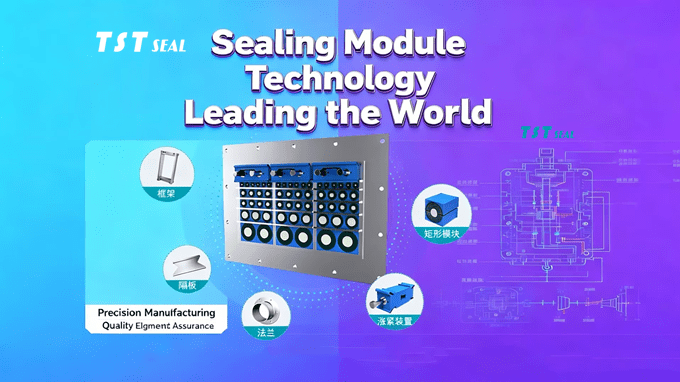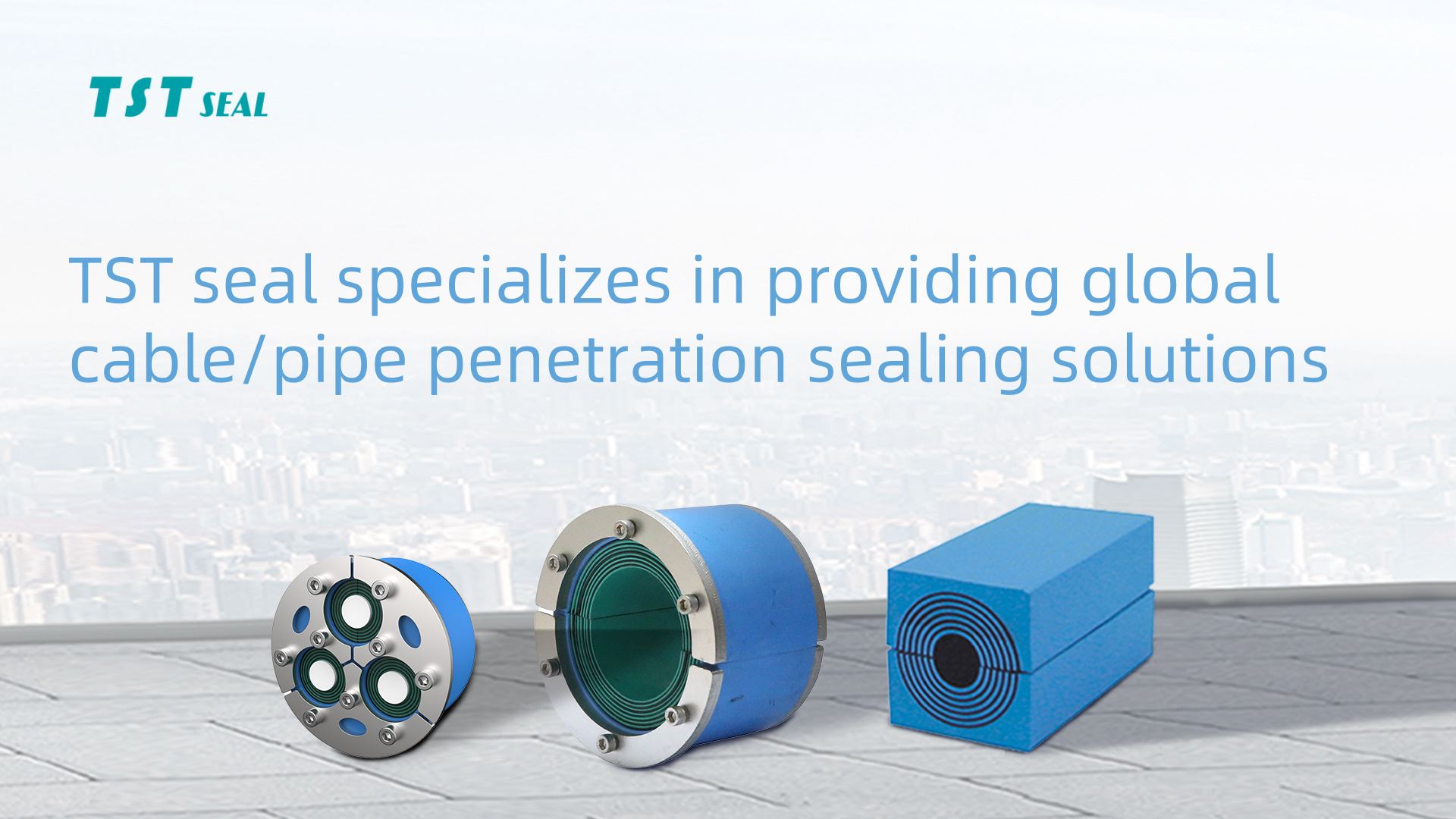
—Building a three-in-one safety barrier for high-risk environments: fire prevention, explosion prevention, and leakage prevention.
Note: The industry-standard term is MCT (Modular Cable Transit). The following TST SEAL analysis is based on actual engineering needs and mainstream products in the oil and gas industry.
Why must the oil and gas industry use the MCT sealing system?
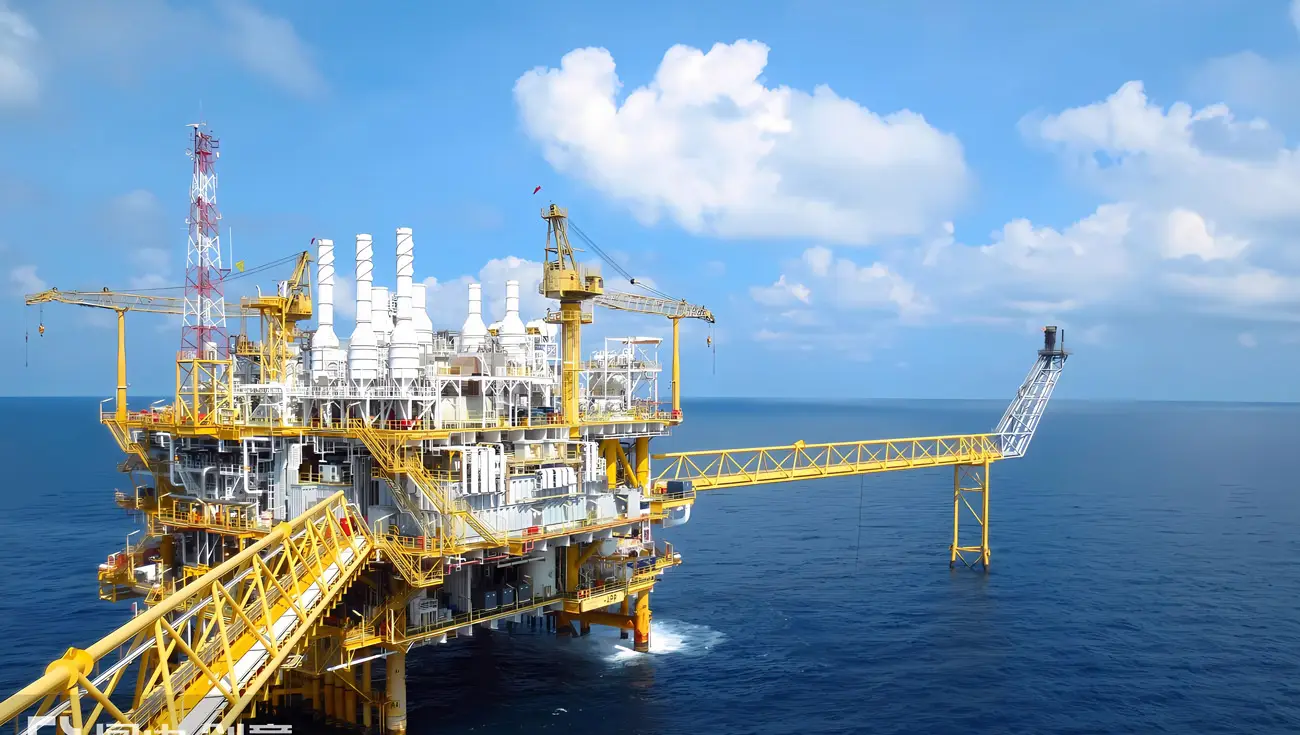
In scenarios such as offshore platforms, FPSOs (Floating Production Storage and Offloading units), refineries, and LNG receiving terminals, cable penetration points face extreme risks:
Flammable and explosive environment: The concentrations of gases such as methane, ethane, and H₂S are consistently within the explosive limits (LEL).
High pressure and high temperature conditions: Wellhead area pressure > 10 MPa, temperature > 150℃
Corrosive media: seawater salt spray, sulfides, amine corrosion
Mandatory regulatory requirements: API RP 14C, IEC 60079, SIL 2/3 functional safety
Traditional sealing methods (fireproof putty, potting compound) are prone to failure in such environments, while the MCT system, with its modular, certified, and maintainable features, has become the industry standard solution.
- Core Functions of MCT in Oil and Gas Scenarios
✅ 1. Intrinsically safe explosion-proof (Ex Protection)
Block the spread of ignition source:
Sealing modules (fluororubber/EPDM) fill cable gaps → prevent flammable gases from spreading along the channel.
A60 fire-resistant layer → Maintains integrity for 3 hours in the event of a fire, preventing the spread of flames.
Meets explosion-proof certification:
IEC 60079-0/-1/-14 (Ex d, Ex e, Ex i)
ATEX Directive 2014/34/EU (Zone 1/2)
📌 Case Study: After adopting TST SEAL MCT, a certain North Sea platform reduced the gas leakage rate at the cross-section to <0.1 L/min and passed DNV GL Ex certification.
✅ 2. Multiple protection integration
TST SEAL Threat | MCT Response Plan |
fire | The ceramic fiber layer withstands 1000℃ for 3 hours (A60). |
H₂S corrosion | Fluororubber modules can withstand concentrations >100 ppm |
Seawater soaking | EPDM module IP68 (10m water depth 72h) |
Electromagnetic interference | EMI shielded type (SE>80 dB @ 1 GHz) |
✅ 3. Adaptable to complex wiring
High-density cable penetration: A single system can accommodate 50+ cables (Φ1–50mm).
Online capacity expansion: Reserved spare modules; adding new cables requires no downtime.
Piping compatibility: Hydraulic pipes and instrument air pipes can be integrated within the same frame.
III. Typical Application Scenarios and Selection Guidelines
3.1 Offshore Platforms & FPSOs
Key areas:
Wellhead control panel ↔ Central control room
Living area ↔ Process area fireproof bulkhead
Cable tunnel below helicopter deck
Key points for selection:
Frame material: 316L stainless steel (resistant to seawater corrosion)
Sealing module: Fluororubber (resistant to hydrocarbons and H₂S)
Certification requirements: DNV-GL, ABS, API 14C
🛳️ Data: On average, 200–500 MCTs are used on an FPSO, accounting for 15–20% of the cost of insulation.
3.2 Onshore Refineries & LNG Facilities
Key areas:
Compressor room ↔ DCS rack room
Instrument cables in the tank area pass through the fire dike
Cold box area (-162℃) low temperature seal
Key points for selection:
Low-temperature silicone module (withstands -196℃)
Anti-static design (surface resistance <10⁶ Ω)
SIL 3 certification (IEC 61508)
3.3 Pipeline Valve Chamber & Compressor Station
challenge:
Remote unattended operation → Maintenance-free operation required
Dust/rodent invasion
plan:
All-metal frame + double seal
Anti-rodent module (with built-in wire mesh)
- Mainstream Products and Suppliers
TST SEAL supplier | Representative products | Advantages of the oil and gas industry |
TST SEAL (China) | TST-MCT Ex | The preferred domestic alternative, certified by CCS/DNV, with costs 30% lower. |
💡 Selection advice:
Offshore projects: Prioritize TST SEAL (High Reliability)
Onshore Projects: TST SEAL (High cost-performance ratio, fast delivery)
EMI-sensitive area: TST SEAL EMC (shielding effectiveness >80 dB)
- Key Installation and Maintenance Specifications
✅ Installation process (API RP 14C compliant):
Hole opening: CNC cutting, tolerance ±1mm
Welding: The frame and bulkhead are continuously welded around the entire circumference; PT testing showed no cracks.
Module assembly: Hole diameter = cable outer diameter + 0.5mm; cutting burrs with a knife is prohibited.
Tightening: Torque wrench calibration (25±2 N·m)
test:
Air tightness test: Hold pressure at 0.1 MPa for 10 minutes
Grounding resistance: <0.1 Ω (anti-static)
🔧 Maintenance Plan:
Every 6 months: Infrared thermal imager module aging inspection.
Each major overhaul: Replace modules that have been in use for more than 5 years.
Emergency capacity expansion: Using backup modules, completion within 30 minutes.
⚠️ Common causes of failure:
Module material mismatch (e.g., NBR used in an H₂S environment → expansion failure).
Frame not grounded → Static electricity buildup triggers explosion
- Economic Benefit Analysis
TST SEAL Comparison Items | MCT system | Traditional fireproof putty |
Initial cost | High ($500–$5000/point) | Low ($50–$200/point) |
life | 15–20 years | 2–3 years (requires redoing) |
Downtime losses | None (online maintenance) | High (production needs to be stopped) |
Accident risk | Extremely low (certification guarantee) | High (depends on construction quality) |
📊 ROI data: DNV statistics show that MCT’s total lifecycle cost on oil and gas platforms is 45% lower than that of traditional methods.
“In the oil and gas industry, a single breach leak can be the start of a disaster.”
Although MCT sealing modules account for only a small percentage of equipment investment, they are the last physical barrier against fire, explosion, and environmental pollution. From deep-sea drilling platforms to desert natural gas processing plants, their standardized, highly reliable, and easy-to-maintain characteristics safeguard the lives and assets behind every cable.
Choosing the certified MCT system means choosing the most serious commitment to security.