Energy storage areas within photovoltaic (PV) power plants are often situated in complex outdoor environments. The sealing of cable and pipe transits represents a critical safety concern; seal failure can easily trigger equipment malfunctions and safety accidents, while improper sealing designs exacerbate risks and hinder stable plant operation.
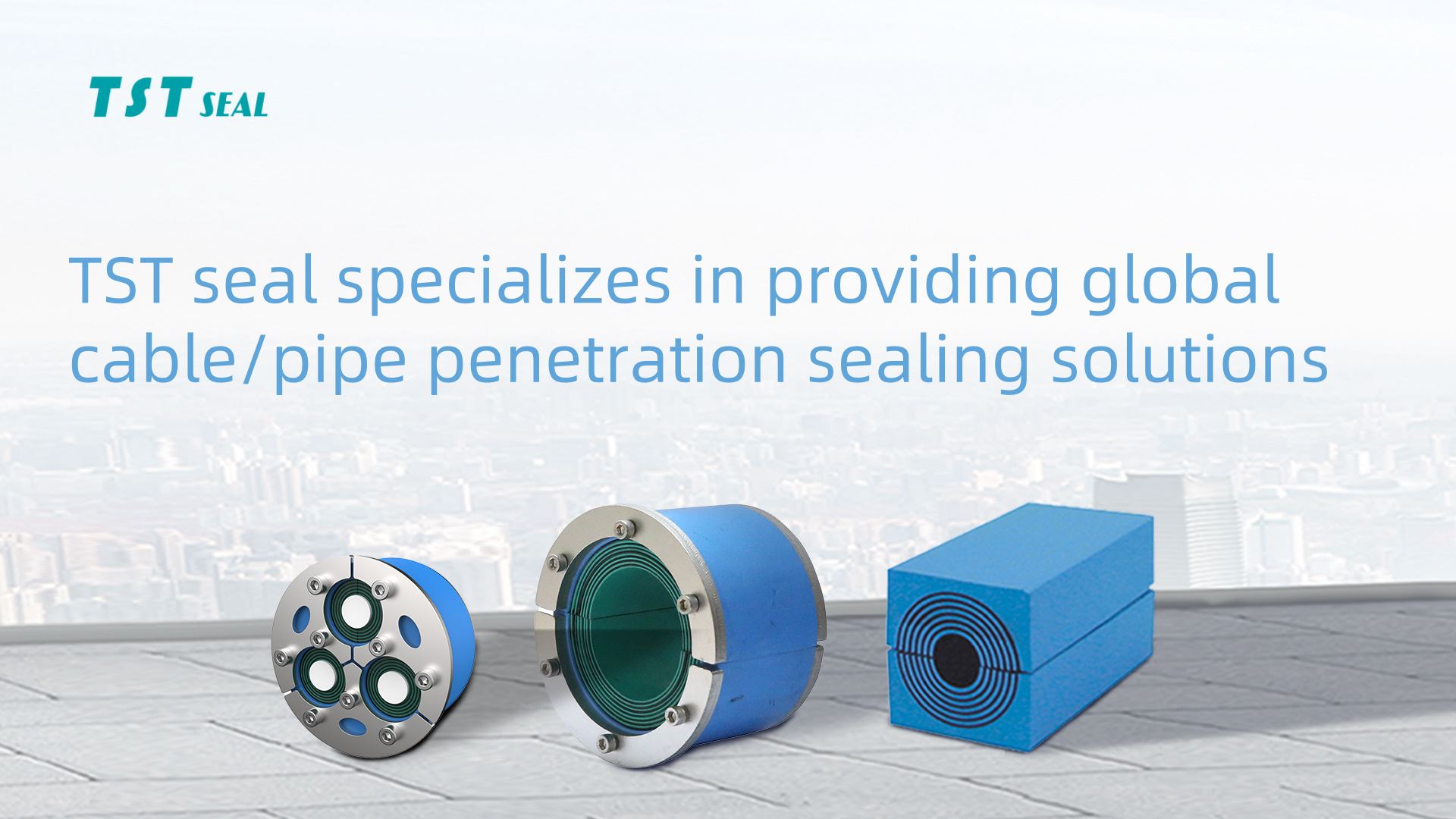
TST Seal MCT transit sealing modules address the core challenges of sealing cable and pipe transits in PV power plants. By providing precise, practical sealing solutions, they eliminate sealing hazards at the source and comprehensively enhance the operational safety of the plant.
- Key Sealing Challenges for PV Power Plant Transits
Energy storage areas (including cabinets, cable trenches, and power distribution rooms) are exposed to the outdoors for extended periods. Cable and pipe transit points are subject to environmental factors, cabling complexities, and capacity expansion needs, resulting in significant sealing challenges that directly threaten operational safety:
Challenge 1: Extreme outdoor environments cause traditional seals to age and fail
PV power plants are often located in deserts or high-altitude plateaus. Intense UV radiation, extreme diurnal temperature fluctuations, and frequent sandstorms cause traditional sealing materials (such as fire-stop putty or standard rubber strips) to age, crack, and crumble rapidly, leading to a drastic decline in sealing performance. This allows sand, dust, and moisture to penetrate cabinets and transit points for PV module busbars, causing corrosion and short circuits in electrical components, triggering equipment failures, and creating safety hazards.
Challenge 2: Diverse cable specifications lead to chaotic cabling and poor sealing
Energy storage areas must accommodate cables of various specifications. Traditional sealing methods lack the flexibility to adapt to different cable sizes. This results in either chaotic cabling—making maintenance difficult and increasing the risk of poor electrical contact—or excessive sealing gaps that prevent effective fire compartmentalization. In the event of a fire, flames can easily spread through these transit gaps, escalating the scale of the incident and compromising the overall safety of the power plant. Pain Point 3: Capacity expansion and retrofitting of power stations—cumbersome sealing work and heightened risks
As the installed capacity of photovoltaic (PV) power stations increases, energy storage systems require simultaneous expansion. Traditional sealing structures feature fixed designs; expanding capacity necessitates dismantling the original seal, a process that is not only labor-intensive but also causes station downtime. Furthermore, resealing after dismantling often results in gaps, exacerbating sealing vulnerabilities, increasing operational safety risks, and adding to the burden of future safety maintenance.
- TST seal MCT Modules: Solving sealing challenges and comprehensively enhancing power station safety
Addressing the critical sealing challenges associated with cable and pipe penetrations in PV power stations, the TST seal MCT penetration sealing system centers on three high-performance design principles—modularization, peelability, and redundancy. It delivers precise solutions that eliminate sealing vulnerabilities, ensuring the safe and stable operation of PV power stations:
Solution 1: Extreme weather resistance to prevent seal aging and failure
Utilizing proprietary low-smoke, halogen-free EPDM material, the system offers excellent resistance to UV radiation, sand, dust, and extreme temperature fluctuations. It adapts to complex outdoor environments, preventing seal aging, cracking, and powdering. With an overall protection rating of IP68, it completely blocks the ingress of wind-blown sand and dew, effectively sealing gaps at busbar and pipe penetrations. This eliminates risks of electrical component corrosion and short circuits, mitigating safety hazards at the source.
Solution 2: Flexible adaptation to various cable sizes—organized routing and fire-resistant sealing
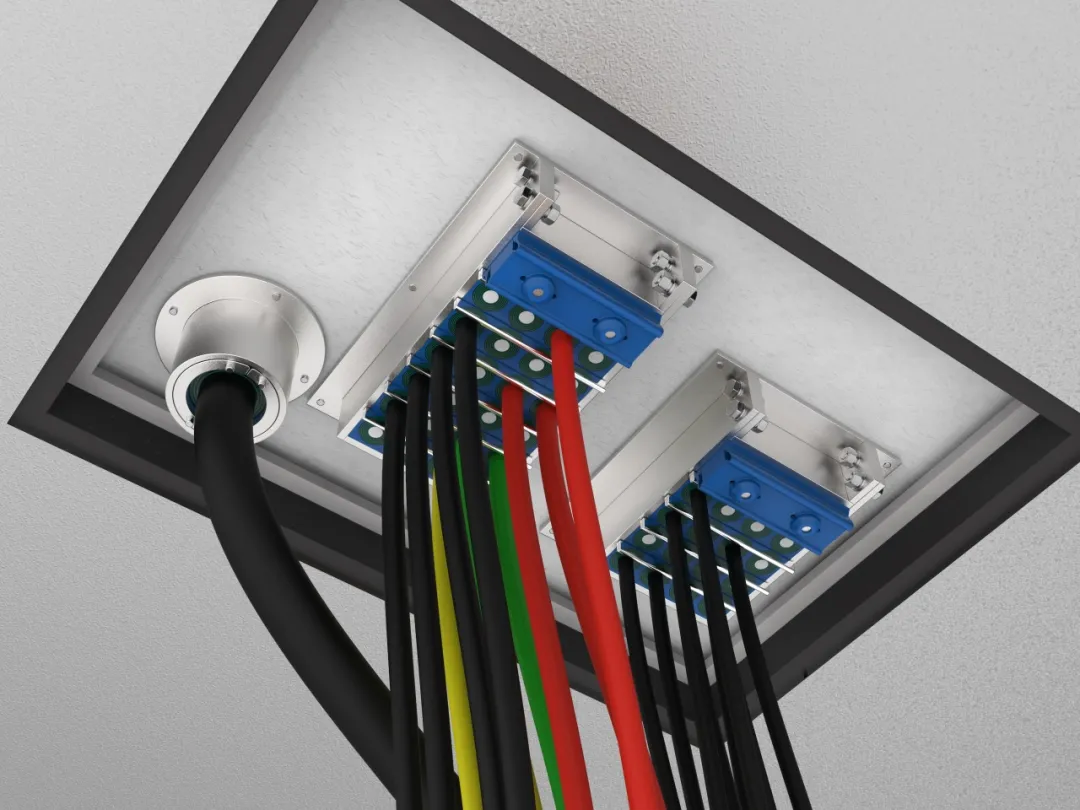
Featuring peelable, variable-diameter technology, the system flexibly accommodates cables and pipes of different specifications. A single module can house dozens of cables, enabling organized, layered routing that reduces the risk of poor electrical contact and enhances maintenance safety. Additionally, the system offers high-level fire resistance, effectively blocking the spread of fire and smoke, establishing fire-rated compartmentalization, preventing fire escalation, and fortifying the safety of power station operations.
Solution 3: Redundant modular design—risk-free expansion and safer installation
The redundant modular design allows for energy storage capacity expansion without dismantling the existing sealing structure; upgrades are completed simply by adding new modules. This completely eliminates the safety risks associated with system downtime and the dismantling process. The modules are easy to install; installation can be completed quickly using simple tools without the need for specialized personnel, thereby reducing safety risks during the process. This solution aligns with the trend of “minimal-staffing” operations in PV plants and lowers costs associated with safety and maintenance.
The safe operation of PV plants relies on reliable sealing at cable and pipe penetrations. The TST seal MCT penetration sealing system precisely addresses three key sealing challenges—extreme operating environments, cable and pipe penetrations, and capacity expansion retrofits—eliminating sealing hazards at the source and ensuring the plant’s long-term, stable, safe, and efficient operation.