In critical scenarios such as spent nuclear fuel reprocessing, radiochemical testing, and high-risk nuclear chemical operations, there exists a specialized chamber—the “hot cell”—that appears silent yet plays a vital role. It serves as the final physical barrier for the centralized handling, isolation, and disposal of radioactive materials. It is also a core containment space within the nuclear industry characterized by the strictest radiation protection standards, the highest airtightness requirements, and the lowest tolerance for safety errors.
While many focus on the massive shielding walls, heavy protective doors, and intelligent monitoring systems of nuclear facilities, they often overlook a crucial fact: the failure of a nuclear safety boundary never begins with the collapse of a sturdy wall, but rather with a breach in the tiny channels that pass through it.
Hot cell walls typically feature shielding thicknesses on the order of meters—sufficient to block high-intensity gamma radiation and establish a fundamental baseline for radiation protection. However, a hot cell is by no means a completely sealed, isolated void; essential functions—such as power supply, signal transmission, process media transfer, and instrumentation monitoring—require established connections between the interior and exterior. Hot cell penetrations are the only functional conduits traversing the shielding wall to link the high-radiation zone inside the cell with the safe “green zone” outside; they are, in every sense, the critical “chokepoints” for hot cell safety.
01 An Overlooked Safety Variable: Wall Penetrations
What constitutes a nuclear safety boundary? Fundamentally, it means ensuring that not a trace of radiation escapes and not a shred of radioactive gas leaks out. As the only functional openings within this safety boundary, penetrations are critical; should any design flaw, seal failure, shielding inadequacy, or age-related deterioration occur, even the thickest walls and the most comprehensive auxiliary protective measures would be rendered useless. 02 Three Major Failure Risks: Each Threatens the Core of Nuclear Facility Operations
Hot cell penetrations are far from ordinary industrial wall sleeves; their reliability is directly linked to personnel radiation safety, equipment operational stability, and regulatory compliance regarding nuclear safety. Should a failure occur, three critical risks emerge simultaneously:
Direct Gamma-Ray Leakage and Total Failure of Radiation Shielding
Traditional penetrations often feature a straight-through design lacking specialized shielding or buffering mechanisms. Radiation can travel in a straight line through gaps alongside cables and pipes, creating “blind spots” in radiation protection. External personnel can receive additional radiation doses without even approaching the hot cell itself; the cumulative long-term harm is irreversible and directly violates the nuclear industry’s strict limits on radiation exposure.
Radioactive Gas Leakage and Breach of the Sealed Safety Boundary
Hot cell interiors constantly contain radioactive aerosols, toxic process gases, and high-risk radioactive media, requiring high-standard airtightness at all times. If the penetration’s sealing structure ages, suffers permanent compression set, or becomes brittle due to radiation, micro-gap leaks occur. The slow seepage of radioactive media breaches compliance thresholds and directly impacts the facility’s nuclear safety rating.
Unplanned System Downtime and High-Risk, High-Dose Maintenance
Damaged traditional fixed penetrations cannot be replaced individually; the entire hot cell must be shut down, and the wall dismantled for repairs. This not only causes prolonged production line downtime and project delays but also forces maintenance personnel to work in high-radiation zones, drastically increasing exposure risks and doubling both maintenance costs and safety pressures.
03 Technological Evolution: From “One-Time Embedded” to “Replaceable”
For a long time, domestic nuclear facilities have predominantly used fixed penetrations. While this design offers low initial construction costs, it presents significant drawbacks over the facility’s full lifecycle: inability to replace individual units, difficult maintenance, and limited service life.
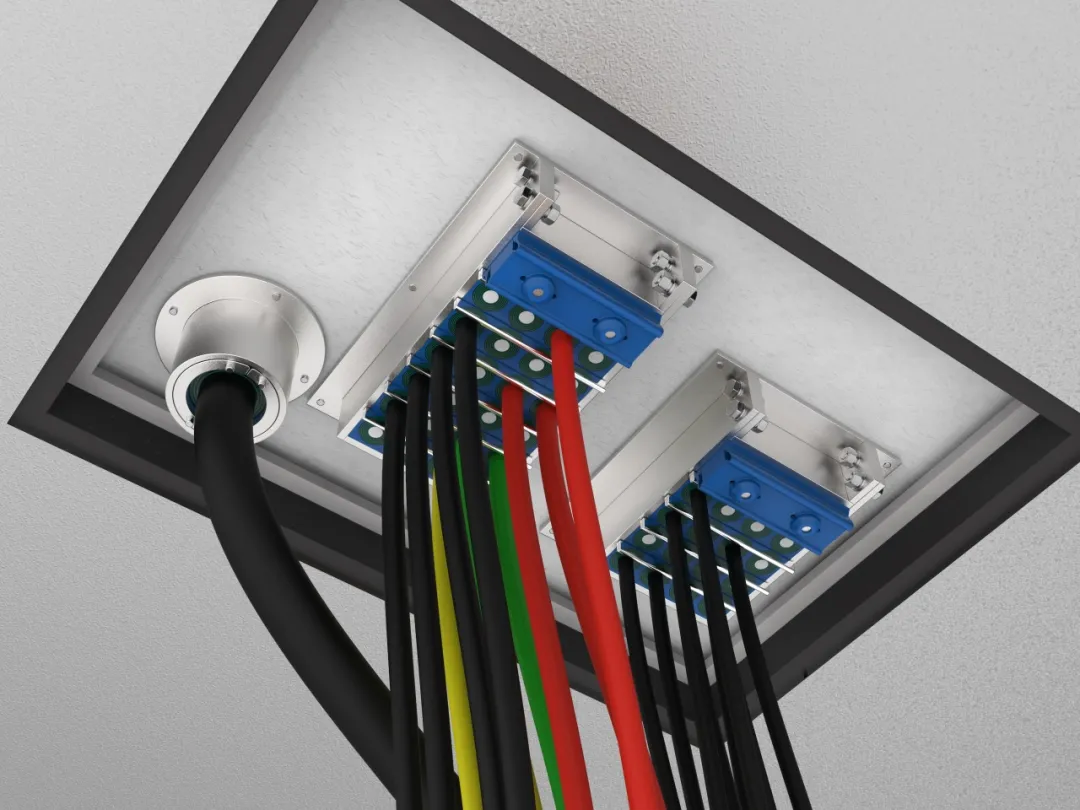
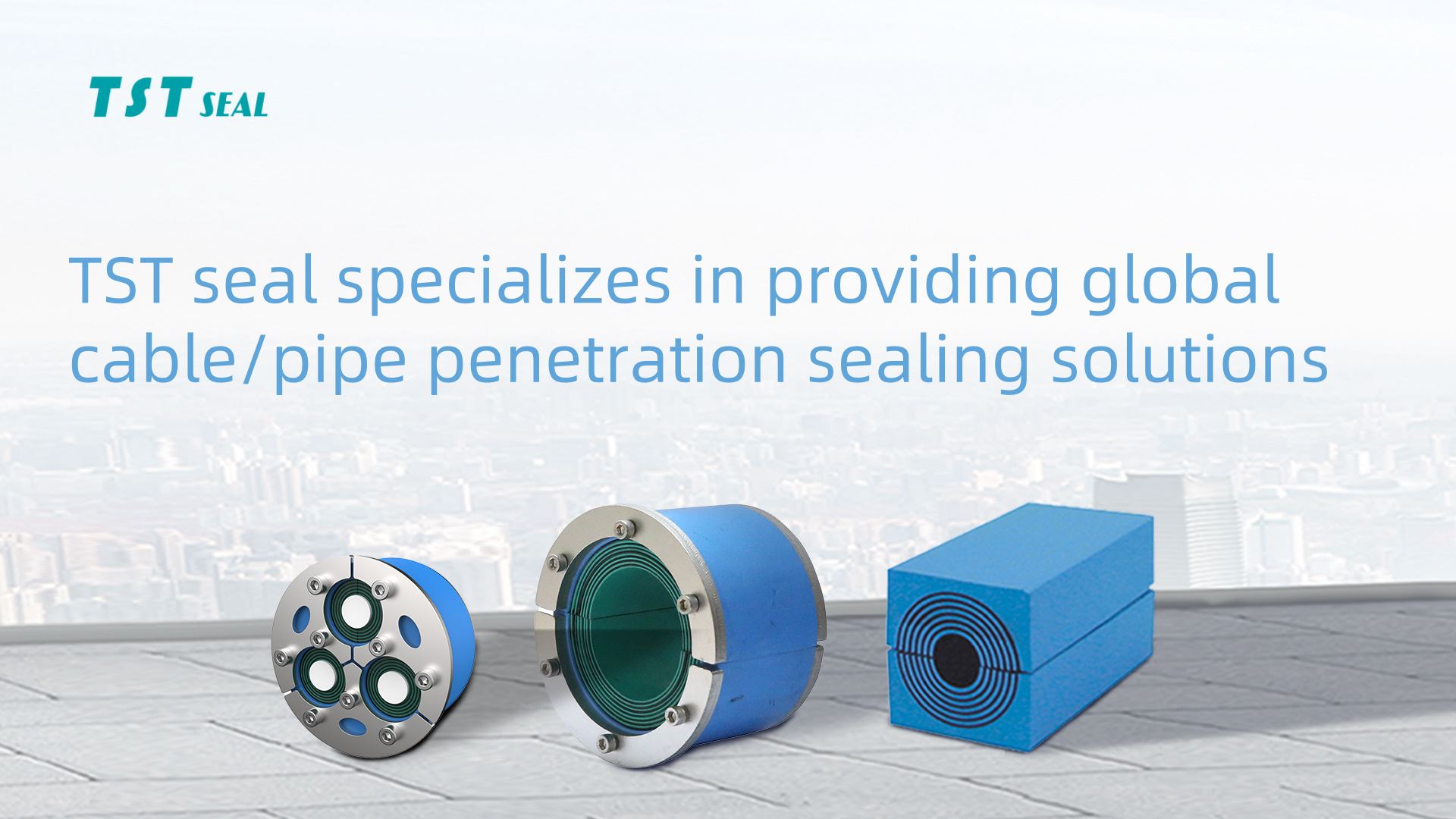
Addressing these industry pain points and the critical need for nuclear safety, TST SEAL has leveraged its expertise in nuclear-grade sealing technology to develop and launch a replaceable hot cell penetration system. Featuring a core design that integrates replaceability, robust shielding, high-performance sealing, and radiation resistance, the system effectively bridges the gap in the practical application of hot cell penetrations in China. There is no room for error in nuclear safety.
When selecting a penetration solution, one must look beyond initial construction budgets and prioritize the assessment of safety redundancy and ease of operation and maintenance throughout the entire lifecycle. TST SEAL’s replaceable penetrations—developed strictly in accordance with public nuclear industry standards and nuclear-grade product development protocols—offer a domestic solution for nuclear safety boundaries. They deliver superior safety redundancy, optimized lifecycle costs, and enhanced operational convenience for a wide range of nuclear facilities in China.