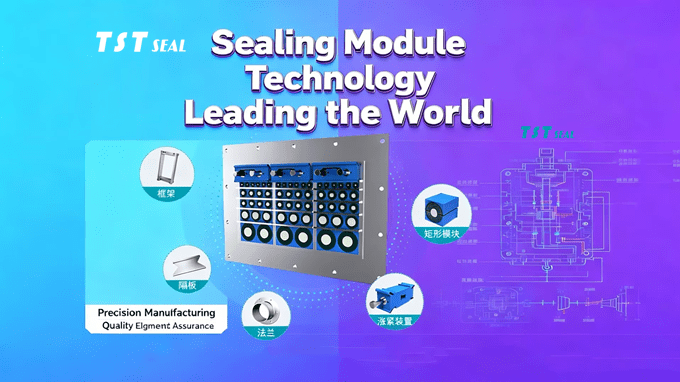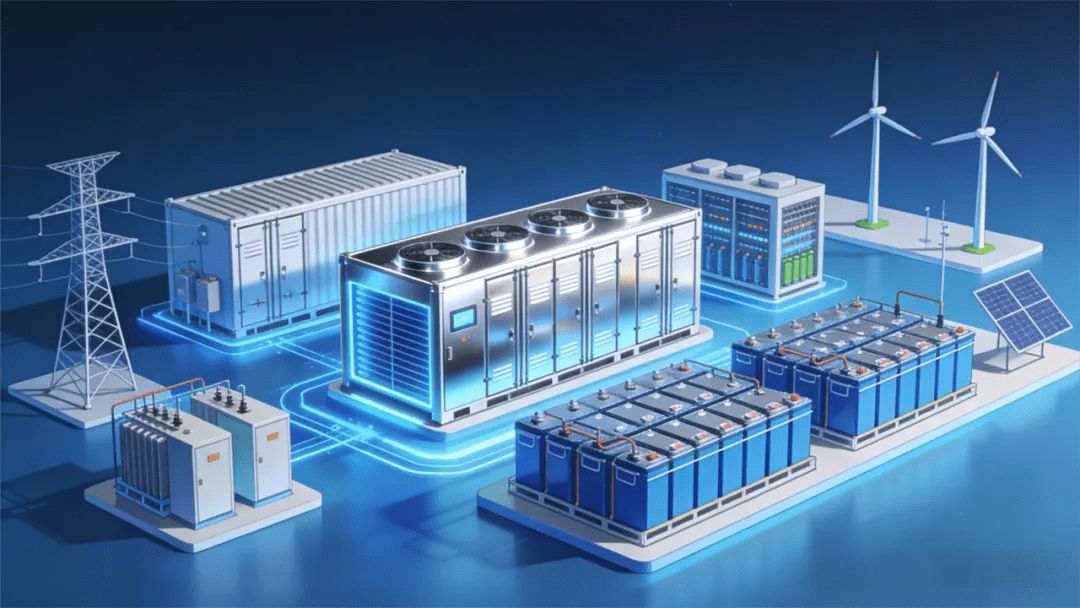
In IT data centers, sealing modules (cable transit sealing systems), though often overlooked, are critical components for ensuring infrastructure security, energy efficiency, and compliance. Their core functions include: preventing airflow leakage, preventing fire spread, enhancing fire compartment integrity, dust and moisture protection, and supporting the maintainability of high-density cabling.
TST SEAL Nico will provide a detailed explanation of typical application scenarios, technical requirements, selection criteria, and industry best practices for data center sealed modules .
- Why do data centers need specialized sealed modules?
Traditional methods (such as fire-retardant putty, expanding foam, and ordinary glamping) have serious drawbacks:
Irreversible sealing: Adding or removing cables requires destructive construction.
Drying and shrinkage: Cracks appear after 1–2 years, causing a short circuit between hot and cold airflows;
No fireproof certification: It rapidly carbonizes and fails in a fire;
High density is not supported: single-hole cable threading efficiency is low.
The TST SEAL modular sealing system can solve the above problems while meeting the stringent requirements of Tier III/IV data centers for availability, security, and energy efficiency.
- Core Application Scenarios
- Sealing of vertical shafts for both electrical and communication lines.
Location: Cable shafts between floors, passageway from UPS room to computer room.
Function:
To prevent fire/smoke from spreading vertically through the “chimney effect” of shafts;
The fire compartment must meet the fire resistance rating of ≥2 hours (EI120, in accordance with GB 50174, NFPA 2001, EN 1366-3).
Solution: Modular fireproof sealing system + intumescent fireproof material lining.
- Cabinet/Rack Cable Entry Points
Location: Bottom of server rack, PDU inlet, rear of network patch panel.
Function:
Prevent cold aisle air leakage (improves refrigeration efficiency by 5%~15%).
Dustproof, rodent-proof, and moisture-proof (especially in humid southern regions);
Upgrade the overall IP54 protection level of the server rack.
plan:
Small diameter: Brush Grommet;
Multi-cable hybrid: Modular sealed base (such as Roxtec DataSeal, nVent ERICO).
- Sealing of underfloor wiring channels/wall penetrations (Raised Floor & Wall Penetrations)
Location: Cable tray outlet under the raised floor, wall perforation.
Pain point: Unsealed holes cause short circuits in cold air → Increased PUE.
plan:
Adjustable modular sealing plate (supports subsequent cable addition);
It works in conjunction with a blanking panel to achieve fully enclosed airflow management.
- The battery room and UPS room are sealed together.
Special requirements:
Anti-acid mist corrosion (lead-acid batteries);
Explosion-proof (to prevent lithium battery thermal runaway risk);
Airtightness (to prevent hydrogen from accumulating).
Materials: Acid-resistant EPDM + 316L stainless steel frame.
- Outdoor fiber optic/power inlet
Location: Building exterior wall, entrance to underground utility tunnel.
Require:
IP68 waterproof and dustproof;
UV resistant and withstands temperatures as low as -40°C;
Prevents rodents from biting through.
Solution: Armored optical cable dedicated sealing module + stainless steel waterproof connector.
III. Key Technical Performance Requirements of TST SEAL Sealing Module
Performance dimension | Requirements and standards | Test basis |
Fire resistance | EI60 ~ EI120 (integrity + insulation) | EN 1366-3, UL 1479, GB/T 19666 |
airtightness | Leakage rate < 0.1 L/s·m² @ 50Pa | ISO 9001 Airflow Test (for Cold Aisle) |
Material safety | Low smoke halogen-free (LSZH), RoHS, REACH | IEC 60754, IEC 61034 |
Smoke density | Smoke generation ≤50% | UL 2043 (Plenum Rating) |
Electromagnetic compatibility (EMC) | Optional shielded version (>60dB @ 30MHz–1GHz) | EN 55032 |
Installation and maintenance | Supports hot-swapping and tool-free installation/removal. | Manufacturer Design Specifications |
✅ Key Indicators:
UL 2043 certification: for use in plenum spaces, is a mandatory requirement for data centers in North America;
LSZH material: Prevents the release of toxic hydrogen halide gas in the event of a fire.
- Best Practices for Selection and Deployment
✅ Selection Principles:
Material selection based on regional grading:
Core computer room: fireproof + airtight + LSZH;
Office area: Basic dust prevention is sufficient.
Supports high-density cabling: a single module can carry 10 to 50 hybrid cables (fiber optic + power + network cable).
Reserve capacity for future expansion: The module fill rate is recommended to be ≤70% to facilitate future cable additions.
✅ Installation points:
All through holes are 100% sealed, leaving no “spare holes”;
The bottom seal of the cabinet is used in conjunction with a blanking panel;
Regularly inspect and check whether the seals are aging or loose.
✅ Energy efficiency linkage:
According to research by the Uptime Institute, an unsealed bottom of a server rack can result in up to 30% loss of cool air.
Effective sealing can reduce PUE by 0.05~0.15, saving hundreds of thousands of yuan in electricity costs annually (based on a 10MW data center).
- Mainstream Products and Suppliers (International/Domestic)
type | International Brands | Domestic brands |
Modular through-sealing | Roxtec (DataSeal) | TST SEAL ( China ) |
💡 Trend: Domestic high-end modules (such as TST SEAL ) have passed UL 2043, CE and RoHS, and have a significant cost-performance advantage.
- Compliance and Standards Reference
China: GB 50174-2017 “Code for Design of Data Centers” Article 13.2.6: “Cable holes that pass through fire-resistant partitions shall be tightly filled with fire-resistant sealing materials.”
United States: NFPA 75/76, NEC Article 645, UL 2043;
Europe: EN 50600-2-4 (physical security of data centers), EN 1366-3 (fire protection testing);
International: TIA-942-B (Tier certification requires complete seal integrity).
In data centers, TST SEAL sealing modules are far from being “minor accessories,” but rather:
🔒 Safety barriers (fireproof, explosion-proof, and toxic fume-proof);
❄️ Energy efficiency leverage (reduce air conditioning leakage and lower PUE);
🛠️ Operations and Maintenance Cornerstone (Supports flexible expansion and improves availability).
Best practices = Full coverage + Certified materials + Modular design + Regular maintenance.
If you require a data center sealed module configuration list template, a detailed explanation of the UL 2043 testing procedure, or a case study of a sealing solution for a Tier IV project, please feel free to email me .