Most data center teams compare unit price and fire rating first. The number that decides whether you rework the opening in three years is a different one: how often you will add cable.
1. Fire, air leakage and future capacity pull against each other
A single floor or wall penetration has to pass three tests at once:
- Fire compartmentation— GB 50016 and GB 23864 in China; EN 1366-3 (EI 60/90/120) on export projects; UL 1479 F/T rating in North America.
- Air-tightness— it sets cold-aisle differential pressure and clean-agent hold time. One leak fails both the PUE target and the door fan test.
- Future capacity— racks move from 6 kW to 15 kW, copper turns into fibre, and the opening configuration changes within two years. This is the item most often skipped, and the most expensive one.
2. Three options compared (material cost per opening, labour excluded)
Modular transit system | Fire pillows / inflatable bags | Firestop mortar and sealant | |
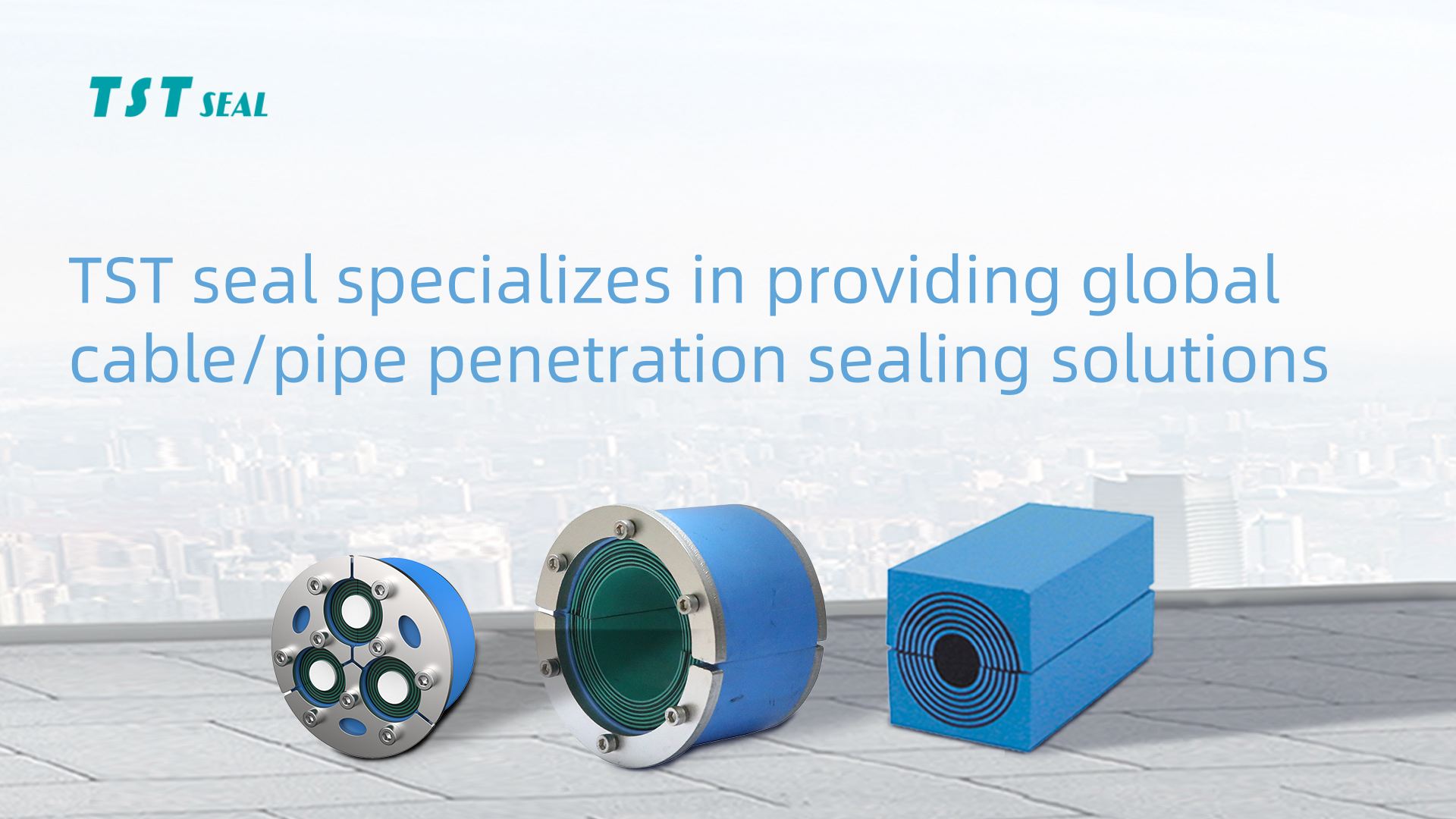
Core function | Frame + rubber modules + compression, IP68, EI 60–120, optional EMC and bonding modules | Intumescent pillows stacked into the opening, roughly EI 60, air-tightness depends on compaction | One-shot pour or trowel fill, good fire performance, no air-tightness rating |
Indicative price | USD 45–130 per opening | USD 9–30 per opening | USD 3–12 per opening |
Best fit | Cold-aisle end walls, risers, UPS and battery rooms, clean-agent rooms | Live-site retrofits, night windows, leased space, temporary seals | Edge sites, a few small openings, unmanned rooms |
Main drawback | Higher upfront cost; frame size must be right the first time, modules locked to the maker’s configuration list | Air-tightness drifts; material settles and needs a 3-month re-check that most projects skip | Irreversible; adding cable means chipping out, and the old/new interface is the weak point |
3. Three real scenarios, three different answers
Scenario 1 — Cold-aisle end wall, 8 racks, 160 cables: modular
At 15 Pa, leakage through the end wall dumps cold air straight into the hot zone. A 200 mm frame with separate rows for copper and fibre. Pros: leakage points go to zero in one pass, and adding cable needs no structural work. Cons: reserve 30% spare capacity in the frame or you cannot add cable in six months — and every spare slot needs a blind module, or the seal is nominal only.
Scenario 2 — Live IDC riser retrofit, no downtime allowed: fire pillows
Night-window work only. Pros: about 30 minutes per opening, back in service the same night, no hot work and no curing. Cons: compaction and settlement need re-checking after three months. Skip that step and air-tightness quietly fails — usually after acceptance.
Scenario 3 — Two or three small openings at an edge site: mortar
Pros: cheapest, simple, no spare parts. Cons: the first cable addition means chipping out again, and it is usually the task that delays a capacity upgrade.
4. Cost the opening over three years, not one
Material is 15–25% of the installed cost of an opening. The rest is labour, downtime windows and rework. At one cable addition per year, mortar overtakes a modular frame within three years — which is why new builds almost always specify frames.
5. FAQ
- Can a modular system be both fire-rated and air-tight?
Yes, but only in the exact configuration the certificate covers. A different frame size, a different module type, or modules from two makers voids it.
- Which standard applies on a Chinese project?
GB 50016 governs compartmentation and GB 23864 covers the sealing material. Export and foreign-invested projects usually add EN 1366-3 EI ratings or UL 1479 F/T ratings.
- Does adding cable later void certification?
Adding the same module type into a spare slot allowed by the maker’s configuration list does not. Cutting the frame or drilling new holes does.
- Does it affect rack bonding or EMC?
The metal frame must be bonded to the building equipotential system. Where shielding is specified, use EMC modules and run the continuity test the maker requires.
- Can it be used in clean-agent rooms?
Yes, but seal quality has to be proven by a door fan room integrity test. Excess leakage area means the agent hold time will not pass.
- The price differs five-fold — is the modular system worth it?
At one addition per year, its three-year cost per opening is usually lower. Below one addition every three years, pillows win.