As offshore wind power expands into deeper and more distant waters, floating platforms, fixed towers, and offshore substations are increasingly exposed to extreme operating conditions—characterized by high salt-mist concentrations, intense vibrations, and drastic temperature fluctuations. Should a seal fail at a point where cables or pipes penetrate a bulkhead, it can trigger a cascade of safety incidents, including compartment leakage, equipment corrosion, and even electrical fires or short circuits.
This article examines the technical suitability and engineering value of the TST Seal MCT transit sealing system within the context of offshore wind power.
Challenges for Transit Sealing in Deep-Sea and Offshore Environments
The unique environment of offshore wind facilities imposes complex requirements on sealing technology:
Corrosion and Vibration Resistance: Exposure to marine salt mist and persistent, wave-induced vibrations can cause traditional sealing materials—such as cement or foam—to crack and detach.
Mixed-Utility Penetrations: Offshore installations involve a diverse range of lines, including high-voltage power cables, fiber-optic control cables, and hydraulic piping. Their varying diameters make it difficult for conventional sealing methods to achieve a tight, secure fit within irregular apertures.
Full-Lifecycle Operations and Maintenance: During frequent capacity upgrades or retrofits, the removal and reinstallation of traditional sealing materials incur high costs and lead to significant downtime.
Multi-Layered Protection: Penetration seals must simultaneously meet stringent standards, including IP-rated watertightness/aertightness, IMO A-60 fire-rating requirements, and, in specific zones, explosion-proof specifications.
Technical Suitability Analysis of TST Seal MCT Sealing Technology
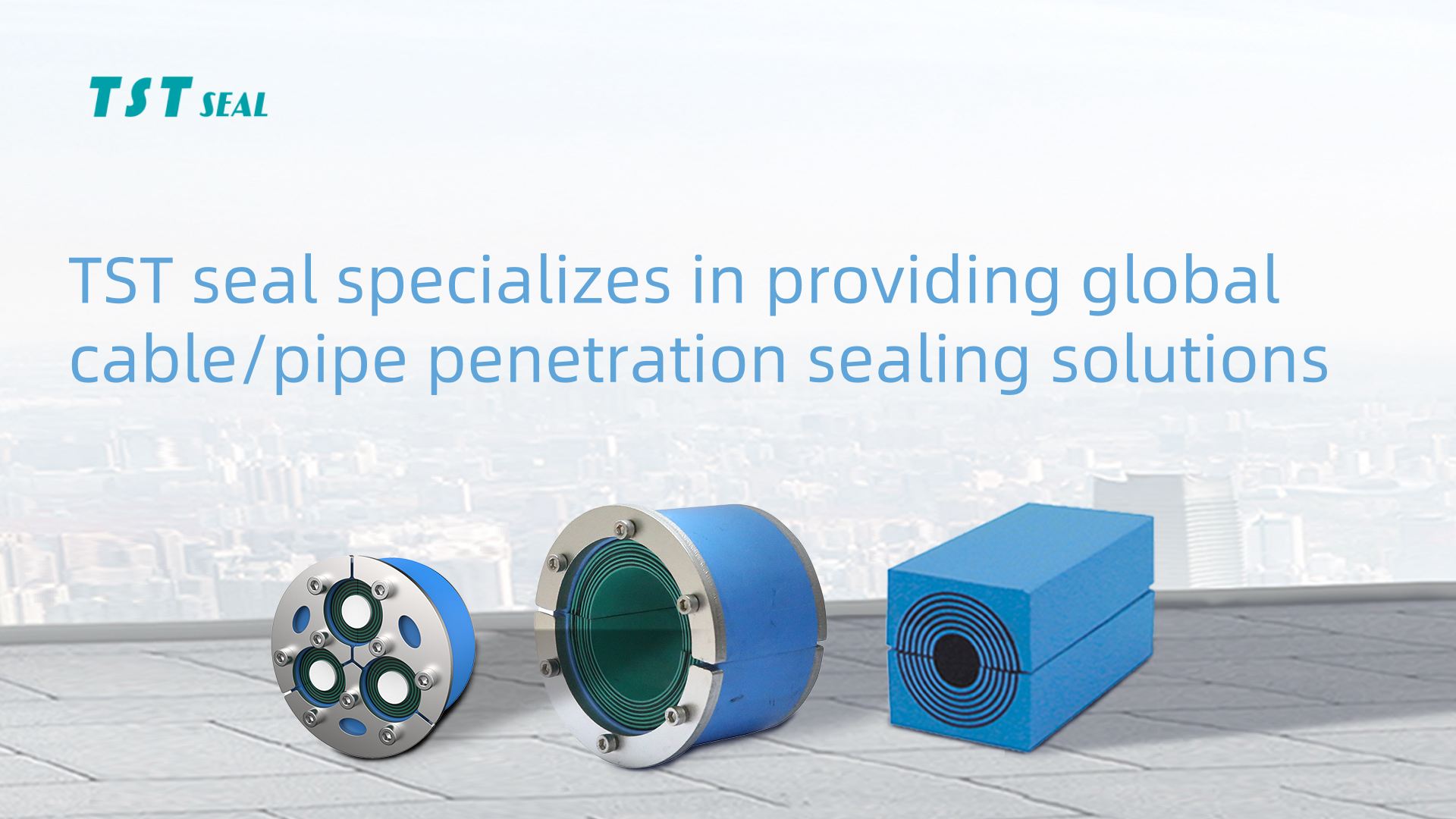
The TST Seal MCT system utilizes a modular design to provide a comprehensive, one-stop transit sealing solution for the offshore wind industry:
- Marine-Grade Material Protection and Multi-Layered Certification
Material Selection: The system incorporates 316L stainless steel frames and specialized, corrosion-resistant rubber modules, ensuring long-term stability within harsh marine atmospheric environments. Protection Rating: The system achieves an IP68 ingress protection rating (watertight/airtight) and complies with the IMO FTPC Part 3 standard for A-60 class fire protection, effectively blocking smoke and flames. It also offers excellent vibration resistance; its structural design is engineered to withstand the continuous dynamic loads and wave impacts characteristic of deep-sea environments, ensuring the structural integrity of the sealing system throughout its entire lifecycle.
Design Lifespan: Based on accelerated material aging tests, the system has a design service life of 30 years. It also offers an optional electromagnetic shielding module to ensure the stable transmission of control signals for offshore units.
- Modular Design Facilitates Lifecycle Operation and Maintenance
Adaptive Sizing: A standardized frame combined with peelable, variable-diameter rubber modules accommodates cables and pipes of various cross-sectional dimensions, allowing for the mixed routing of different types of lines through a single opening.
Non-Destructive Expansion: The system includes built-in capacity for future expansion. When new cables are added, there is no need to compromise the existing seal assembly; simply replacing the relevant modules completes the upgrade. This significantly reduces the time required for offshore installation and minimizes downtime costs.
- Engineering Implementation and Localized Support
Installation Efficiency: A lightweight, bolted structure simplifies on-site installation. When paired with intelligent selection tools, it enables the rapid generation of tailored solutions, thereby boosting construction efficiency.
Project Validation: The system is currently deployed in several fixed offshore transformer stations in China and is being adapted for use on floating offshore wind platforms. Backed by a local R&D and service team, the TST Seal MCT (Multi-Cable Transit) system provides comprehensive technical support, ranging from design consultation to on-site guidance.
Domestic Substitution Drives the Development of Deep-Sea Wind Energy
As the floating offshore wind sector transitions from demonstration projects toward large-scale industrialization, the localization of critical sealing components has become a key strategy for reducing costs and enhancing operational efficiency. With robust credentials—including certifications from seven major international classification societies such as DNV, ABS, and CCS—the TST Seal MCT (Multi-Cable Transit) system is fully capable of replacing high-end imported brands. Moving forward, the company’s R&D will focus on specialized solutions tailored to the unique dynamic loads experienced by floating platforms. Through its highly reliable transit sealing technology, TST Seal provides a foundational safeguard that ensures the safe and stable operation of assets in deep-sea and offshore wind energy projects.