Selecting cable transits for LNG carriers essentially hinges on three specific documents: an A-60 fire-resistance certificate for the sealing modules, a gas-tightness test report, and a formal approval letter from GTT (Gaztransport & Technigaz) for the containment system barrier. These documents are not interchangeable; the absence of any one of them will inevitably lead to complications—and costs—during sea trials or dry-dock repairs.
- The Most Common Pitfall in Selecting A-60 Cable Transit Sealing Modules
When presented with project requirements, many engineers’ first instinct is to assume the system must withstand cryogenic temperatures as low as −163°C. This stems from a fundamental confusion between the LNG cargo containment barrier and standard A-class bulkheads.
Locations for TST Seal A-60 Penetration Sealing Modules: | Actual temperature | Selection Logic |
Transverse bulkheads, pipe trunks, engine room boundaries, deckhouses | −5 to +60°C, ambient temperature | Standard A-60 module with an EPDM matrix is sufficient. |
Weather decks, areas above cargo holds | Salt spray + UV | Upgrade the frame to 316L stainless steel or hot-dip galvanized steel. |
High-temperature zones adjacent to the engine room | Continuous >80°C | Switch to a silicone rubber matrix for service temperatures ≥120°C. |
Penetrations through the primary/secondary barriers of liquid cargo tanks | −163°C | Does not follow standard selection criteria; requires specific approval from GTT. |
Clarifying this point can immediately eliminate significant unnecessary costs and technical misjudgments.
- A Four-Step Selection Process for A-60 Penetration Sealing Modules (Following this sequence will almost certainly ensure the right choice; feel free to ask me for further details.)
Step 1: Is it an “A-Class” division? Check the fire-rating designations on the General Arrangement (GA) plan. If no, proceed with watertight/IP-rated solutions; if yes, move to Step 2.
Step 2: A-60 or A-0? The certificate must explicitly state “A-60.” Using an A-0 rated component for an A-60 bulkhead is one of the most frequent grounds for rejection by classification societies.
Step 3: Does it form a boundary for a hazardous area? For LNG carriers, hazardous zones are defined according to the IGC Code. Boundaries between cargo areas and accommodation spaces, or between cargo pump rooms and adjacent spaces, must also meet gas-tight requirements (supported by an ISO 19922 test report) and include 360° armored grounding.
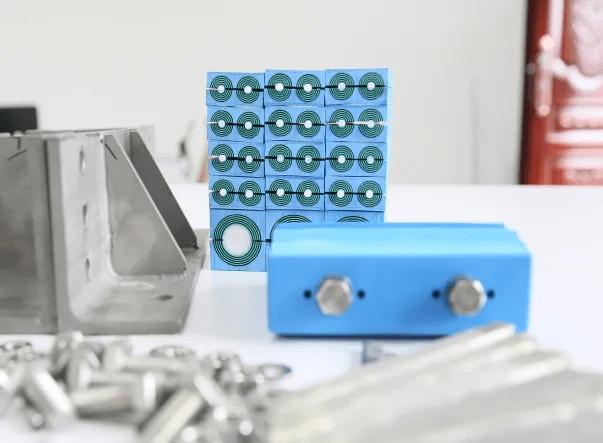
Step 4: Determine the structural configuration. For cables that are already terminated, use openable multi-cable transit (MCT) modules. For spare/reserved openings, install certified blanking plugs (accounting for 15%–25% of the total area). Ensure the cable fill ratio is kept at ≤35%–40% (refer to the specific values stated in the certificate).
Three “Hard” Rules: All components must originate from the same manufacturer/system (frame, module, expansion strip, sealant, and blanking plug must belong to the same certified system; mixing components invalidates the certification). Filler blocks must not be removable by hand, and a 6mm feeler gauge must not be able to be inserted (per the criteria in MSC.1/Circ.1488). The A-Class insulation must extend at least 450mm beyond the penetration point.
III. Application Case Study: TST Seal A-60 Penetration Sealing Modules
Case 1 | Bulkhead between Cargo Area and Accommodation Space (A critical, high-risk zone)
On a 174,000 cbm membrane-type LNG carrier, eight such penetrations were required. The initial proposal—using general-purpose modules with aluminum frames—was rejected during the review phase: aluminum is prohibited in cargo areas (due to risks of low melting point and galvanic corrosion), and the product certificate lacked gas-tightness data. After switching to 316L welded, multi-aperture, openable-type modules, the system passed the ISO 19922 airtightness test on the first attempt.
Lesson: In hazardous zones, “fire-resistant” does not equate to “airtight.”
Case 2 | Excessive Cable Fill Ratio
During a dry-docking repair, six additional signal cables were installed, increasing the fill ratio from 32% to 44%. This eliminated the temperature-rise margin on the unexposed side, resulting in an “Open Item.” The resolution involved removing some cables, upgrading to a larger-sized frame, and submitting a revised configuration calculation sheet to the classification society.
Lesson: Any addition of cables must be preceded by a fill-ratio calculation.
Case 3 | Barrier Penetration Rejected by GTT
A contractor proposed using a standard-temperature FFKM sealing solution for an instrumentation cable penetration through the secondary barrier. GTT rejected the proposal during pre-review, citing three issues: lack of validation for the sealing length at -163°C, the use of an elastomer grade not on the approved list, and the sharing of a single assembly component across both the primary and secondary barriers. The design was ultimately handed over to the containment system patent holder, resulting in a 12-week project delay.
Lesson: Penetrations through containment barriers fall outside the scope of standard, off-the-shelf selections; the process should be initiated as early as possible.
- Five Visible Trends for the Next Five Years
Digital registers are becoming the industry standard. IACS UR requirements now mandate the creation of a “Transit Register” to be included in the vessel’s construction documentation, ensuring full-lifecycle traceability and requiring mandatory updates during dry-docking.
Modular, prefabricated installations. Equipment units—such as HVAC rooms, Fuel Gas Supply Systems (FGSS), and power generation modules—are increasingly being prefabricated off-site with integrated sealing plates, significantly reducing on-site labor hours.
Domestic (Chinese-made) alternatives are entering the mainstream. The domestic MCT-A60 series has received approval from several classification societies. Non-fire-rated (C5) solutions and certain A-0 class applications offer excellent cost-performance ratios; however, for C1/C2-rated components, it is advised to verify the specific scope of certification for each item during acceptance.
Multi-aperture and openable-type modules are becoming the default choice. Cable schedules undergo frequent changes during the construction phase; the rigid “one-cable-per-opening” design approach has been superseded by a more flexible strategy—accommodating multiple cable paths with provisions for future additions.
Requirements for low-carbon and low-smoke performance have become more stringent. A smoke density value (Dm) of ≤200 and the use of Low-Smoke Zero-Halogen (LSZH) materials—previously considered “bonus” features—are now mandatory thresholds. Furthermore, material recyclability and Environmental Product Declaration (EPD) documentation are now factored into the bid evaluation criteria.
- TST Seal A-60 Penetration Sealing Modules: Frequently Asked Questions (FAQ)
Q: Must TST Seal A-60 penetration modules be made of stainless steel?
A: Not necessarily. Hot-dip galvanized steel is acceptable for non-cargo areas under ambient temperature conditions. For cargo areas and exposed, salt-spray-prone areas, 316L stainless steel is recommended. Aluminum is strictly prohibited in cargo areas. Material selection is determined by the location, not the fire rating.
Q: What happens if the cable fill ratio exceeds the limit?
A: It will lead to an excessive temperature rise on the unexposed (non-fire) side, causing the penetration to fail fire resistance testing. It is recommended to keep the fill ratio at ≤35%, and it must never exceed the maximum value specified in the product certificate.
Q: Can fire-stop putty be used to temporarily seal reserved (spare) openings?
A: No. Reserved openings must always be sealed using certified plugs or certified sealing modules. This is a common point of non-compliance frequently cited by marine surveyors.
Q: When should an approval letter from GTT be requested?
A: A list of penetrations through the containment barrier should be compiled during the basic design phase, and the pre-review process should be initiated then. Formal testing and review typically take 8–16 weeks—one of the longest lead-time items in the entire vessel construction process.
Q: Can intrinsically safe (IS) cables and non-intrinsically safe (non-IS) cables pass through the same opening?
A: No. They must be routed through separate A-60 penetration modules; this is a clear requirement under IEC 60092-502.
Although TST Seal A-60 penetration modules for LNG carriers may appear to be minor components, they serve as critical junctions for three distinct systems: structural fire integrity, hazardous area boundaries, and the containment system’s integrity. When selecting these components, follow this order: first, consider the fire rating; second, evaluate the hazardous area interface; and third, assess the environmental conditions. Whenever a penetration involves the containment barrier, it must be treated as a specialized, high-priority item. If you stick to this logic flow, subsequent tasks—such as certificate verification, inspections, and dry-dock repairs—will proceed much more smoothly.