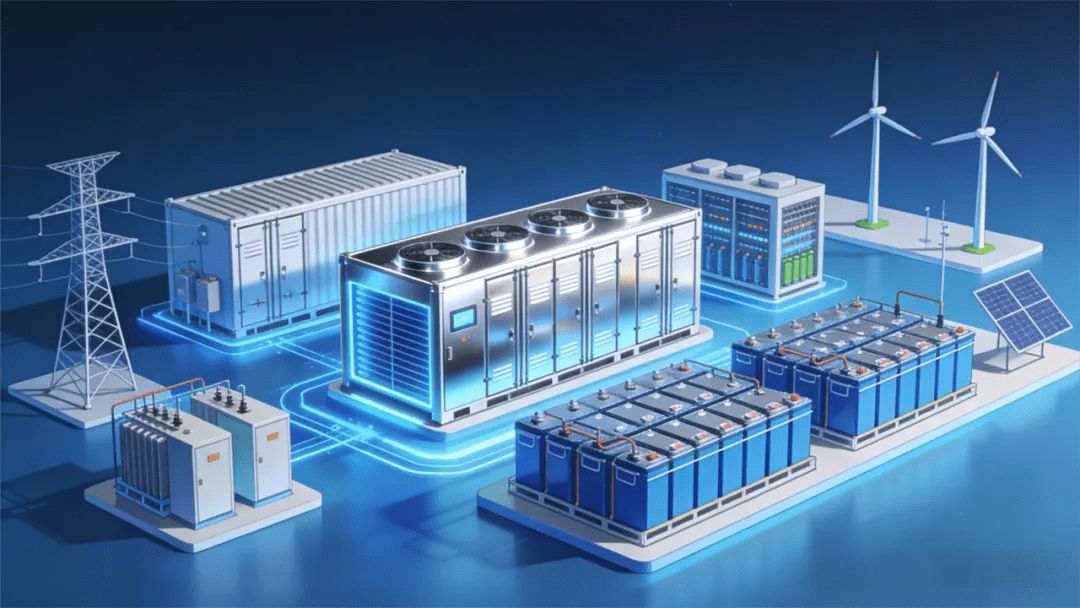
With the rapid development of new energy storage technologies, sealing cable and pipe penetrations in critical areas—such as energy storage enclosures, containers, combiner cabinets, tower sections, and power distribution rooms—is no longer a matter of simply “plugging a hole.” It is a mission-critical task directly linked to a power station’s ability to withstand fire, explosions, water ingress, and electromagnetic interference.
Why do some sealing projects suffer from air and water leaks or prove impossible to retrofit later? Why do penetration points often become pathways for fire spread during accidents? Why do safety hazards multiply and retrofitting costs soar the longer a facility operates?
Addressing the industry’s primary concerns regarding sealing safety, TST SEAL Technology has compiled seven key questions about penetration sealing in the energy storage sector, clearly outlining the pain points, standards, and solutions.
Q1
How can high-density cabling in energy storage enclosures be sealed to ensure neatness, leak-proof performance, and safety?
A
Energy storage containers, inverter cabinets, and power distribution rooms feature dense cabling. Traditional sealing methods struggle to accommodate cables of various sizes, often leading to gaps, looseness, and an inability to add or remove cables later. The TST SEAL MCT modular sealing system supports multiple cables per opening and high-density layouts; its peelable core layers allow for flexible diameter adjustment, ensuring truly organized cabling and robust protection.
Q2
What fire-sealing rating is required to safeguard the baseline of energy storage safety?
A
Fire safety requirements for energy storage power stations are stringent. If a penetration point fails to provide fire protection, it can easily become a conduit for the spread of flames and smoke, creating major safety hazards. TST SEAL penetration sealing systems offer UL94 V-0 flame retardancy and A60 fire integrity, with some products providing up to 3 hours of fire resistance. They effectively establish fire compartments, blocking the spread of flames and smoke penetration for the required duration. Additionally, they offer excellent explosion-proof capabilities, minimizing the scope of potential accidents and ensuring reliable support for emergency response.
Q3
How can long-term durability and effectiveness be maintained in environments exposed to humidity, condensation, or salt spray?
A
Coastal facilities, subsea corridors, hydropower stations, and outdoor cabinets are highly susceptible to moisture and corrosion, while traditional sealing materials tend to become brittle and leak. TST SEAL utilizes proprietary EPDM rubber combined with an anti-corrosive metal frame; it is UV-resistant, salt-spray resistant, and anti-aging, offering IP68-rated protection that fundamentally prevents the intrusion of moisture and condensation.
Q4
How can seal cracking or detachment be prevented in wind turbine towers subject to high vibration?
A
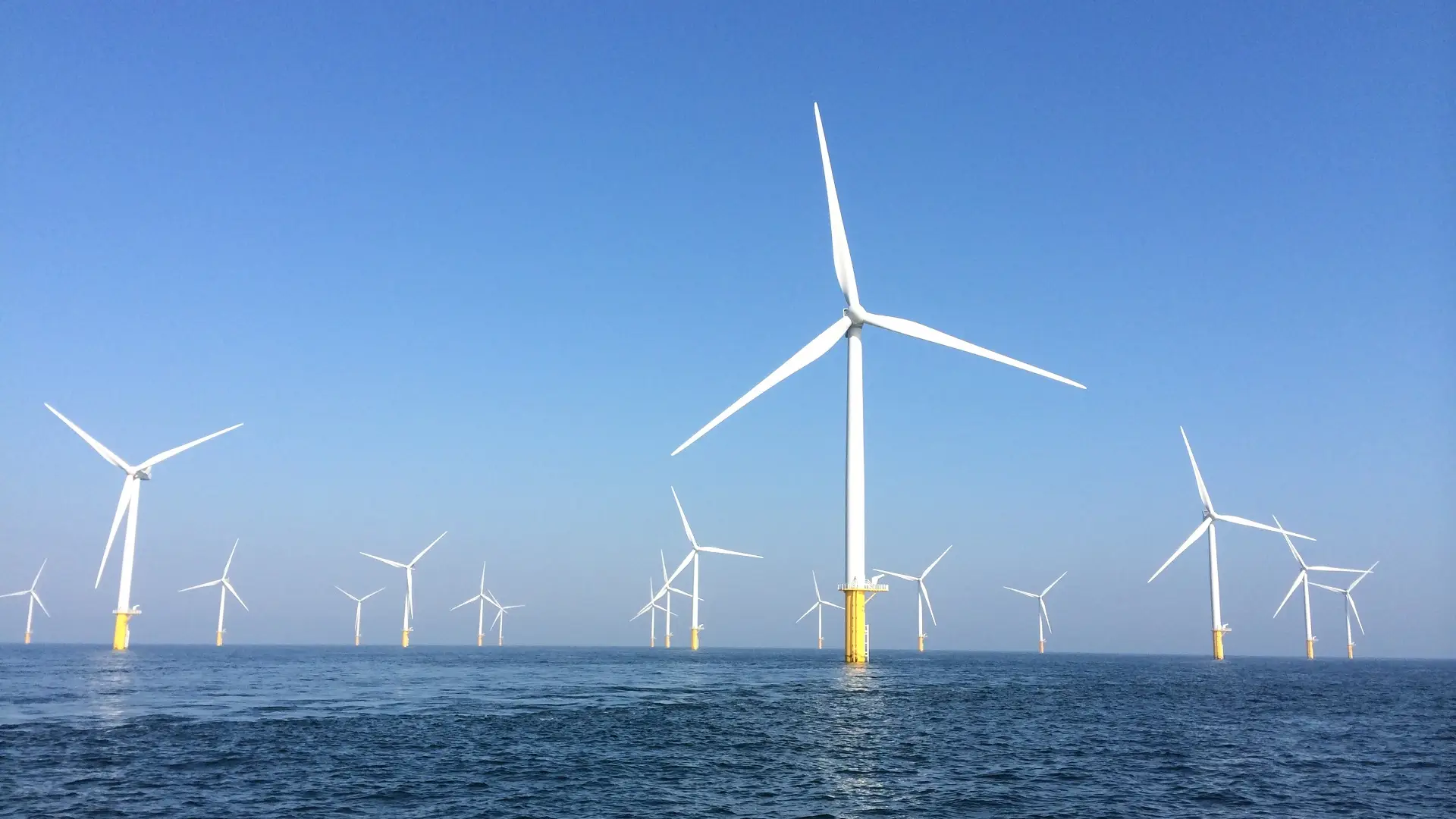
Wind power and energy storage environments involve frequent vibration, causing ordinary seals to loosen and fail. Our system incorporates anti-vibration sealing components to buffer shocks and impacts. Its single-sided installation design fits the confined spaces of towers, ensuring long-term stability without failure.
Q5
Is it necessary to break through walls and redo the sealing when expanding capacity or rerouting cables at a power station?
A
Traditional seals are often molded as a single, permanent unit; adding or removing cables later requires destroying the original structure, resulting in high costs, long timelines, and significant risks. The MCT sealing system supports capacity expansion and modifications without system downtime. It can be reopened repeatedly without structural damage, drastically reducing the total lifecycle cost.
Q6
How can stable equipment operation be ensured in environments with strong electromagnetic interference?
A
Power distribution rooms, auxiliary control rooms, and high-voltage compartments feature complex electromagnetic environments where interference can compromise control system safety. Our dedicated EMC (Electromagnetic Compatibility) solution shields against interference and stabilizes electric fields, ensuring more reliable electrical equipment operation.
Q7
What authoritative certifications are required for sealing systems to meet compliance standards for overseas deployment and project acceptance?
A
Approval processes—covering domestic and international projects, classification societies, fire safety, and explosion-proof standards—are becoming increasingly rigorous; non-compliance directly impacts grid connection and project delivery. TST SEAL products hold certifications from multiple international classification societies, as well as fire safety, explosion-proof, and environmental agencies, providing a one-stop solution for compliance requirements in both domestic and overseas projects.
Interested in a sealing solution tailored to your project?
Feel free to email me to discuss your needs and get one-on-one answers to your technical challenges:
Energy storage container sealing solutions
Wind and solar power cable penetration sealing
Fire-resistant sealing / EMC / Explosion-proof design
Retrofitting and optimization of aging facilities