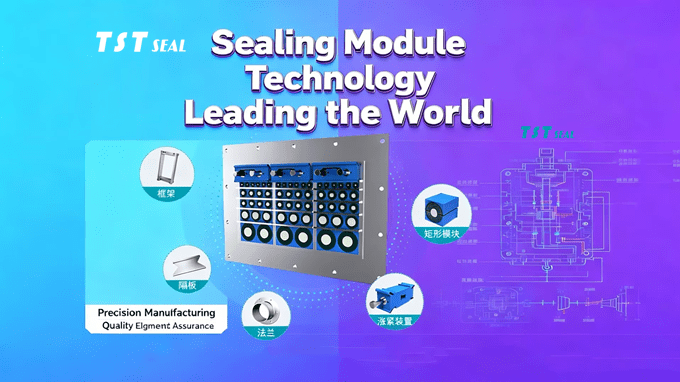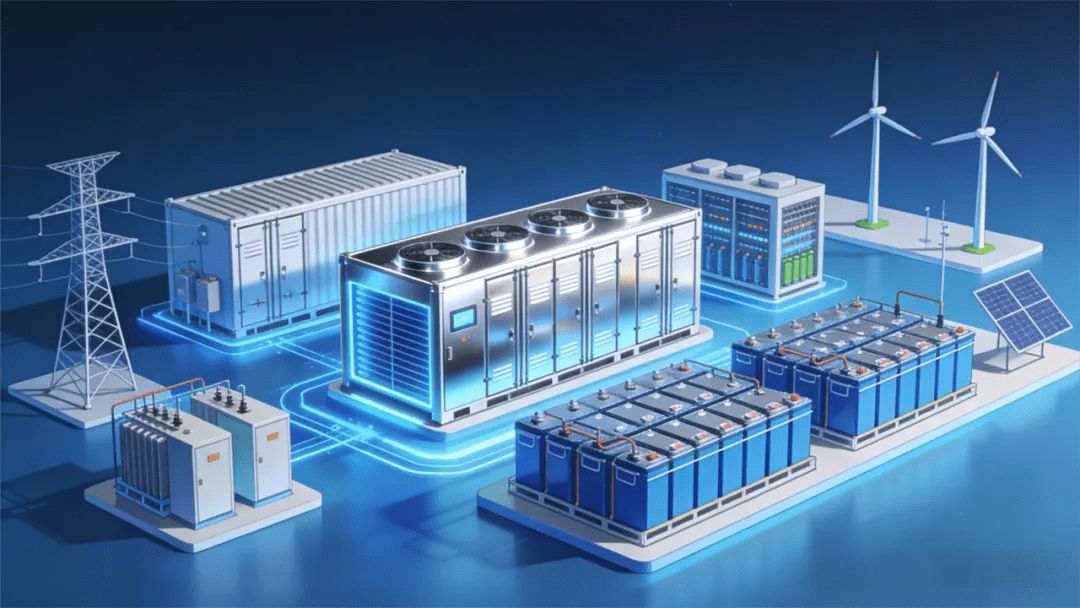
The application of sealing modules for offshore wind turbine towers is a key technological aspect in ensuring the safe, reliable, and long-term operation of wind turbines. Because towers are exposed to extreme marine environments such as high salt spray, strong winds and waves, continuous vibration, drastic temperature and humidity changes, and biological corrosion, their sealing systems must possess high levels of waterproofing, corrosion resistance, fire resistance, vibration resistance, and maintainability. TST Seal Nico will provide a detailed analysis of the core application scenarios, technical requirements, typical structures, and industry applications of sealing modules in offshore wind turbine towers .
- Main Application Areas of TST SEAL Sealing Modules in Offshore Wind Turbines
- The connection between the bottom of the tower and the foundation (the most demanding area)
Function:
Prevent seawater and moisture from entering the interior through gaps in the tower-foundation flange or cable perforations;
Prevent corrosive gases from entering the electrical compartment at the bottom of the tower (including converters, transformers, etc.).
challenge:
Prolonged immersion or splashing (splash zone);
The impact of the giant wave caused slight structural movement.
✅ Solution:
Employ a double-sealing structure (such as Jujie Technology’s patent CN222162826U):
External: Weather-resistant EPDM + 316L stainless steel pressure ring, resisting salt spray;
Internal: Detachable fireproof sealing module for easy maintenance.
- Cable Transit Points inside the tower
Location:
Flange connections at the tower sections;
Vertical cable channels from the foundation to the cabin pass through floor/partition holes.
Function:
Fire separation: to prevent the spread of fire along cable channels (requires A60 or EI68 fire resistance rating);
Airtight and waterproof: Maintains dryness inside the tower and protects electrical equipment;
EMC shielding: Reduces the impact of frequency converter electromagnetic interference on the control system.
Typical configuration:
Modular sealing systems (such as Roxtec R series, Taist MCT);
Supports the mixed insertion of power cables, optical fibers, and control lines;
Reserve 20% to 30% of the channels for future expansion.
- Sealing of tower manhole doors and inspection ports
Require:
IP65 or higher protection (protection against heavy rain intrusion);
Resistant to UV aging (doors are often exposed to sunlight);
Quickly turn on/off without affecting operational efficiency.
Material:
EPDM foam sealing strip + stainless steel pressure plate;
The surface is coated with an anti-UV coating.
- Sealed ventilation and heat dissipation vents (with filtration function)
Special design:
It uses a waterproof and breathable membrane (ePTFE) + salt spray filter;
It allows for internal and external pressure balance, but blocks liquid water and salt particles;
It features an integrated automatic drain valve to remove condensate.
- Key Technical Performance Requirements of TST SEAL Sealing Module
Performance dimension | Require | Test Standards |
Protection level | IP68 (1m underwater, 72h) | IEC 60529 |
Salt spray resistance | ≥1000 hours C5-M level (ISO 12944) | ISO 9227 |
Fire rating | A60 (marine) or EI68 (land equivalent) | IMO FTP Code, EN 1366-3 |
Temperature range | -40°C ~ +90°C (High cabin temperature during northern winters) | — |
Vibration resistance | 10–500Hz, 5mm amplitude, IP68 compliant | DNV-RP-0297 |
Material life | ≥25 years (matching the design life of the wind turbine) | ASTM G154 (UV aging) |
📌 Golden combination of material selection:
Sealing body: High-saturation EPDM (resistant to salt spray + UV + thermo-oxidative aging);
Metal parts: 316L stainless steel (Mo≥2.5%, resistant to pitting corrosion);
Fireproof layer: Halogen-free expanded graphite (expands 10 times in the event of a fire to seal gaps).
III. Typical Sealing System Structure (Modular Design)
Advantages:
No on-site gluing/welding is required, making it suitable for construction in confined spaces at sea;
A single damaged module can be replaced independently without needing to shut down and disassemble the entire system.
It supports two modes: “install the frame first, then run the cable” or “install with cable”.
- Industry Innovation and Patented Technologies
TST SEAL Sealing Module ( Mainstream in China )
“Full-Scene Adaptation” module: Covers cables from φ3 to 300mm;
Special groove for armored cables to prevent steel wires from scratching the seal.
Double sealing: external shielding + internal sealing structure, forming double protection;
The internal seals can be quickly replaced from the cabin side.
Roxtec (Global Mainstream)
Multidiameter™ technology: Single-hole sealing of cables of different diameters;
It has been applied to large-scale projects such as Hornsea in the UK and Shaba in Yangjiang, China.
- Common Failures and Preventive Measures
Failure Mode | root cause | TST SEAL Sealing Module Prevention Solution |
Bottom water inlet | The flange seal was not double-protected. | It adopts an “external water-blocking ring + internal sealing module” approach. |
Cable perforation corrosion | Use 304 stainless steel | Forced use of 316L + Dacromet coating |
Sealing ring crack | Ordinary NBR is not UV resistant | Nuclear-grade EPDM (UV-resistant formula) is selected. |
Fireproof failure | Failed A60 test | Verify IMO/DNV fire protection certificates during procurement. |
- TST SEAL Maintenance Recommendations
Regular inspection: During annual shutdown maintenance, check the compression status of the sealing module and for any cracks;
Establish a ledger: record the installation date, material batch, and expected lifespan of each seal;
Spare parts strategy: Stock commonly used sealing modules on maintenance ships to achieve “24-hour emergency replacement”.
Offshore wind turbine tower sealing modules have been upgraded from “auxiliary components” to critical safety barriers. The core value of TST SEAL sealing modules lies in:
🔒 Protects against marine corrosion and extends equipment lifespan;
🔥 Blocks the path of fire spread, enhancing inherent safety;
⚙️ Supports efficient operation and maintenance, reducing LCOE (Levelized Cost of Electricity).
Future direction: evolving towards intelligent monitoring (integrated humidity/leakage sensors), self-healing materials, and optimization of carbon footprint throughout the entire life cycle.