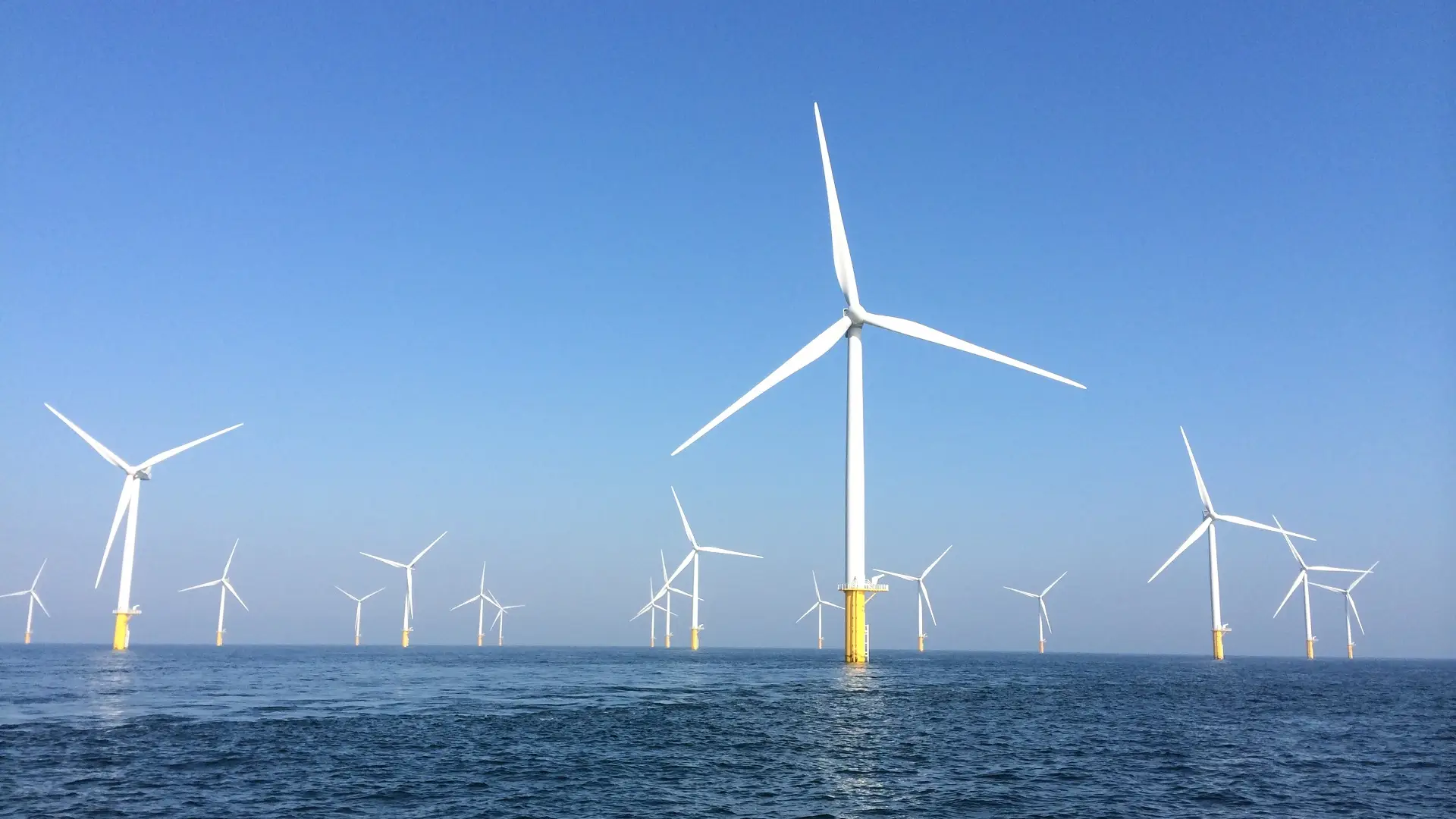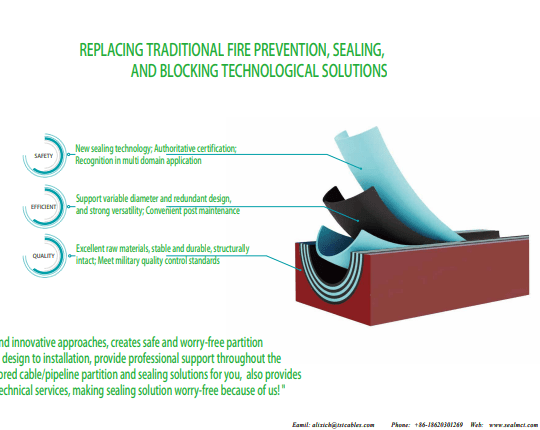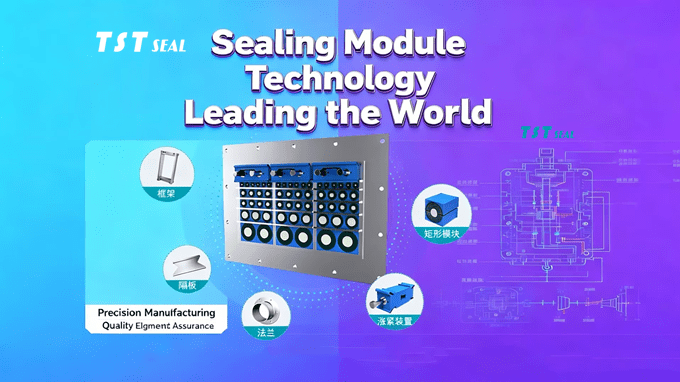

In offshore or onshore wind power projects, the selection of materials for the sealing modules of offshore wind turbine towers directly affects the safety, reliability, operation and maintenance costs, and overall lifecycle benefits of the turbine. Because the tower operates under harsh conditions such as high wind loads, vibration, temperature fluctuations, and corrosion (especially offshore), the selection of sealing module materials requires a systematic consideration of six key factors:
- Environmental Resistance
This is the primary prerequisite for material selection, and it must be precisely matched according to the project’s geographical location:
Environment type | Key Challenges | Recommended materials |
offshore/offshore | High salt spray (Cl⁻), high humidity, biofouling, and splash. | EPDM (Ethylene Propylene Diene Monomer) + 316L Stainless Steel |
High-altitude and cold regions (such as Northern Europe and Inner Mongolia) | Low-temperature embrittlement (below -40°C) | Low-temperature EPDM or silicone rubber (VMQ) |
desert/plateau | Strong ultraviolet radiation, large temperature difference between day and night, sandstorms | UV-resistant formula EPDM + surface coating |
Industrial pollution area | SO₂, NOₓ, acid rain | EPDM (Polar-resistant media) |
⚠️ Prohibited material: Ordinary nitrile rubber (NBR) – not resistant to ozone and UV, will crack after 1-2 years at sea.
- Functional Performance Requirements
The sealing module needs to meet multiple functions simultaneously, and the materials must be versatile:
Function | Material performance requirements | Test Standards |
Waterproof and dustproof | Long-term compression recovery rate >70% | ASTM D395 (Compression Set) |
Fireproof and flame retardant | Expands upon contact with fire, low smoke and halogen-free | IEC 60332-3, UL 94 V-0 |
Aging resistance | Hardness variation ≤ ±10 Shore A over 25-year lifespan | ISO 188 (heat aging), ASTM G154 (UV) |
Low gas release | Avoid contaminating electrical contacts | ASTM E595 (TML <1.0%, CVCM <0.1%) |
✅ Preferred: Nuclear-grade EPDM (although not for nuclear use, its low gas release and high purity characteristics are suitable for wind power electrical nacelles).
III. Adaptability to Mechanical and Dynamic Loads
The tower oscillates continuously under wind load (displacement can reach ±20mm), requiring a seal that is both flexible and resilient.
Fatigue resistance: The material must pass more than 10⁶ dynamic compression cycles;
Shear resistance: The cable and sealing interface do not experience fretting wear under vibration;
Structural design:
It adopts a split/adjustable module, allowing for slight cable displacement;
Avoid rigid potting (such as epoxy resin) as it is prone to cracking.
📌 Key performance indicator: Compression set ≤25% @ 100°C×70h.
- Compatibility and Installation Friendliness
Cable compatibility:
Armored cables must have a smooth inner cavity to prevent the steel wires from cutting the seal.
Optical fibers need to be clamped with low stress to avoid signal attenuation.
Lubricant compatibility:
Use only water-based or fluorine-based lubricants;
Silicone oil/mineral oil are strictly prohibited (as they will cause EPDM to swell).
Installation process:
The recommended material hardness is 60–75 Shore A — too hard and it will be difficult to install; too soft and it will be easy to squeeze out.
- Certification and Compliance
Different regions/owners have mandatory certification requirements, and the selection of materials must be “certified”:
Application scenarios | Required certification |
Offshore wind power | DNV GL, CCS, ABS, ISO 12944 C5-M (corrosion resistant) |
Export to Europe | CE, RoHS, REACH, EN 45545 (if rail transit interface is included) |
Fire prevention requirements | IMO FTP Code (A60), EI68 (land equivalent), UL 2043 (if used for booster stations) |
General Industry | IP68 (IEC 60529), UL 746C (Polymer Safety) |
✅ Procurement red line: Sealing modules without third-party certification reports shall not be used in critical parts of the tower.
- Life Cycle Cost (LCC)
Don’t just look at the unit price! A comprehensive evaluation is needed:
Cost items | illustrate |
Initial cost | High-quality EPDM+316L modules are 30% to 50% more expensive than ordinary products. |
Installation costs | Modular design can save 50% of labor (no welding/grouting required). |
Maintenance costs | It can be repeatedly opened, reducing the cost of a single replacement by 80%. |
Failure cost | A water ingress into the tower caused a shutdown, resulting in losses exceeding ¥1 million. |
💡 Economic conclusion: Over a 25-year lifespan, high-quality sealed modules reduce LCC by more than 40%.
Material Selection Decision Quick Reference
Project conditions | Recommended sealing body | Recommendation framework | Key Certification |
Offshore wind power in the East China Sea | Weather-resistant EPDM (UV resistant + salt spray resistant) | 316L stainless steel | DNV GL, C5-M, IP68 |
Inner Mongolia High-Altitude Project | Low-temperature EPDM (Tg < -50°C) | 304 stainless steel | GB/T 2423 (Low Temperature Test) |
European export projects | LSZH EPDM | 316L + Dacromet coating | CE, RoHS, A60 fire retardant |
Floating wind power (high dynamic range) | Highly resilient EPDM + buffer structure | Anti-loosening quick-release frame | DNV-RU-SHIP Pt.4 |
TST SEAL recommends:
Offshore wind turbine tower sealing module material selection = environmental adaptability × functional compliance × complete certifications × optimal LCC
Prioritize the use of type-approved sealing systems (such as TST SEAL ) rather than assembling materials from scratch . Ensuring that the materials, structure, and manufacturing process are all validated is crucial to truly safeguarding the wind turbine’s “lifeline.”
If you require the ” Technical Specifications for Sealing Module Materials for Offshore Wind Turbine Towers “, please contact me via email .