
Beneath the city’s surface, a crisscrossing network of cables, fiber optic cables, and water/gas pipelines forms the “underground nerve network” of modern civilization. Every opening left by these pipelines as they pass through basement walls, utility shafts, and substation foundations is a potential flood entrance, gas conduit, and fire spread path. Once the seal fails, it can lead to anything from equipment short circuits and shutdowns to severe flooding, explosions, or data interruptions—the consequences are unimaginable.
It is precisely at such critical junctures that TST SEAL high-performance sealing modules are becoming the “invisible gatekeepers” for the safe operation of underground infrastructure.
- The “Triple Threat” of the Underground Environment
Groundwater Infiltration: Fluctuations in groundwater levels and backflow from torrential rain can subject wall penetrations to water pressures of 0.1–0.6 MPa, making ordinary cement seals prone to cracking and leakage.
Harmful Gas Intrusion: Methane (CH₄) and hydrogen sulfide (H₂S) released from sewage pipes can enter the electrical distribution room through gaps, posing a hazard when reaching explosive concentrations (methane 5%–15%).
Rats and Ants Damage and Fire Spread: Rats gnaw on cable sheaths, causing short circuits; in a fire, flames spread rapidly upwards along the pipe shaft via a “chimney effect.”
📌 Data shows that over 60% of underground substation failures originate from wall-penetrating seal failure.
- How does the TST SEAL sealing module precisely address these issues?
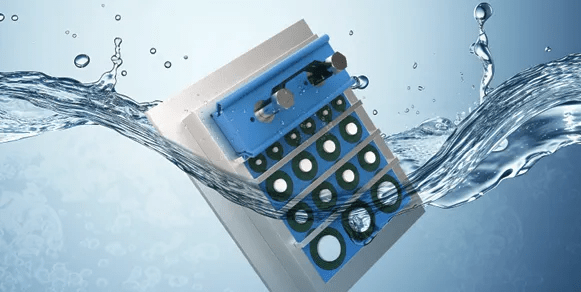
✅ 1. Watertight Protection: IP68 Dynamic Sealing: Utilizing peelable EPDM or silicone modules, uniform pressure is applied through a metal frame, ensuring the rubber tightly wraps the cable; Even if the cable slightly moves due to thermal expansion and contraction, the sealing lip maintains a contact stress >0.3MPa; It passes a 0.5MPa hydrostatic pressure test for 72 hours without leakage, far exceeding traditional asphalt-impregnated hemp or foam sealant.
✅ 2. Fireproof and Flame Retardant: Class A Fire-Resistant Barrier
In critical areas such as substations and subways, ceramicized silicone modules + 316L stainless steel frames are used;
In a fire (1000℃), the material transforms into a hard ceramic layer, maintaining circuit integrity for 90 minutes (compliant with IEC 60331);
Prevents the spread of flames and high-temperature smoke through pipe corridors to other fire compartments.
✅ 3. Explosion-Proof and Airtight: Blocks Hazardous Gases
In gas pressure regulating stations and sewage treatment plants, Ex d IIC-class explosion-proof sealing systems are used;
The module structure meets GB 3836.2 standards and can withstand internal explosions without rupture;
Airtightness reaches ≤0.1 L/(min·m²) @ 500Pa, effectively isolating gases such as methane and H₂S.
✅ 4. Resistance to Biological Intrusion: Prevents “Rat Trails” from Becoming “Fire Trails”
The module surface is smooth and non-porous, preventing rats from gnawing;
Optional stainless steel armored slots physically prevent rodents from entering.
III. Typical Application Scenarios and Cases of TST SEAL Sealing Modules
Application Scenarios of TST SEAL MTC Module System: | Solution: | Effectiveness: |
Urban Underground Utility Tunnels | TST-MCB peelable module + A-60 frame | Prevents rainwater backflow, supports future expansion of fiber optic cables, and improves operation and maintenance efficiency by 50%. |
Subway Substation Cable Entry | Ceramicized silicone module + EMI shielding layer | Complies with EN 45545 HL3 fire safety certification, ensuring zero interference to signal systems. |
Data Center Underground Incoming Line Room | Multi-path EPDM module + rodent-proof steel mesh | Prevents termite infestation, maintaining Tier III availability. |
Gas Company Pressure Regulating Station | FKM fluororubber explosion-proof module | ATEX certified, eliminating the risk of methane leaks. |
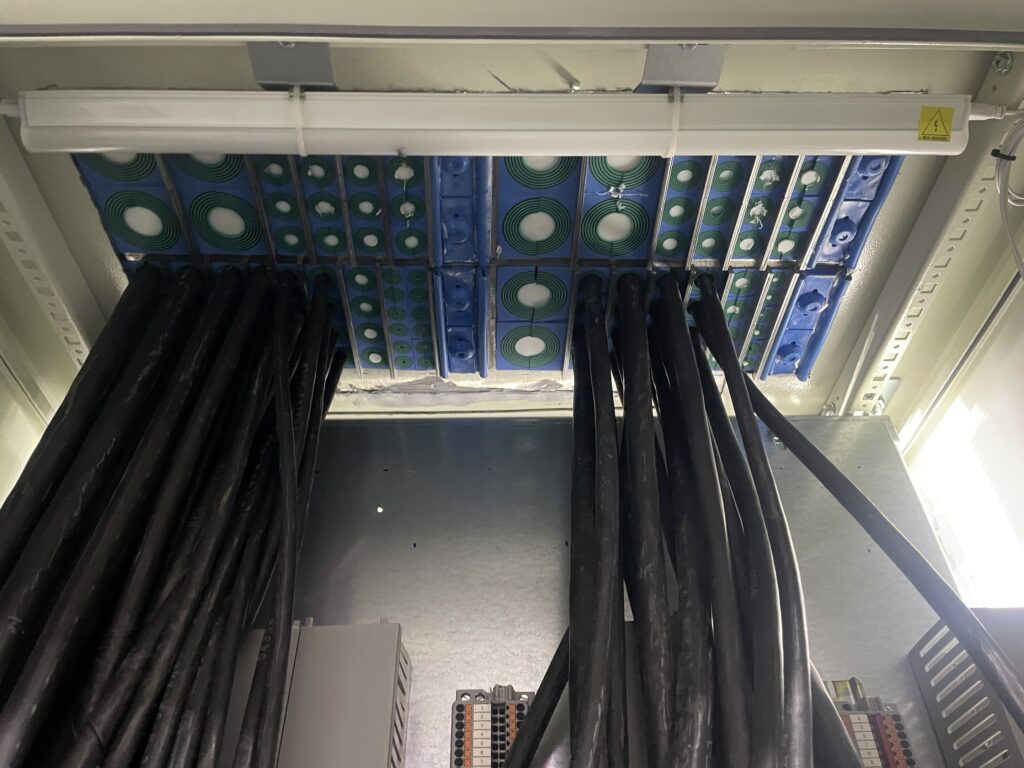
✅ Case Study: A 220kV underground substation in Shenzhen, originally sealed with concrete, experienced water seepage and power outages every rainy season. After switching to the TST SEAL modular sealing system, it achieved zero failures for three consecutive years, saving over ¥800,000 in emergency repair costs annually.
- Key Considerations for Selecting Sealing Modules
Define the Media Type: Is it power cable, fiber optic cable, or gas/water pipe? Material compatibility is required.
Assess Water Pressure Rating: Groundwater depth determines the required watertightness rating (typically ≥0.3MPa).
Fire Resistance Requirements: Substations and subways require Class A fire resistance; ordinary properties can choose Class B1.
Provide Expansion Space: Adopt a peelable design to avoid future “wall breaking and drilling.”
Complete Certifications: Must possess at least GB/T 19666 (flame retardant) and GB 50016 (fireproof) compliance certificates. Furthermore, TST SEAL has obtained certifications from DNV, RS, ABS, BV, RINA, CCS, CRCC, CCC, IOS, EN, RoHS, and REACH.
- Future Trends: Smart + Green + Integrated
Smart Monitoring: Embedded humidity sensors provide real-time warnings of water leakage risks.
Green Materials: Bio-based EPDM and recycled stainless steel frames reduce carbon footprint.
BIM Integration: Sealing module parameters are incorporated into a digital twin model for full lifecycle management. The tranquility of the underground world begins with a high-performance, through-wall module system.
Don’t underestimate this small module—it works silently, yet safeguards countless lights, the pulse of the city, and the deluge of data. In the wave of “resilient city” construction, TST SEAL high-performance sealing modules have evolved from “auxiliary components” to the cornerstone of underground infrastructure safety.
As the saying goes: Skyscrapers rise from the ground, underground sealing determines the fate of the world.