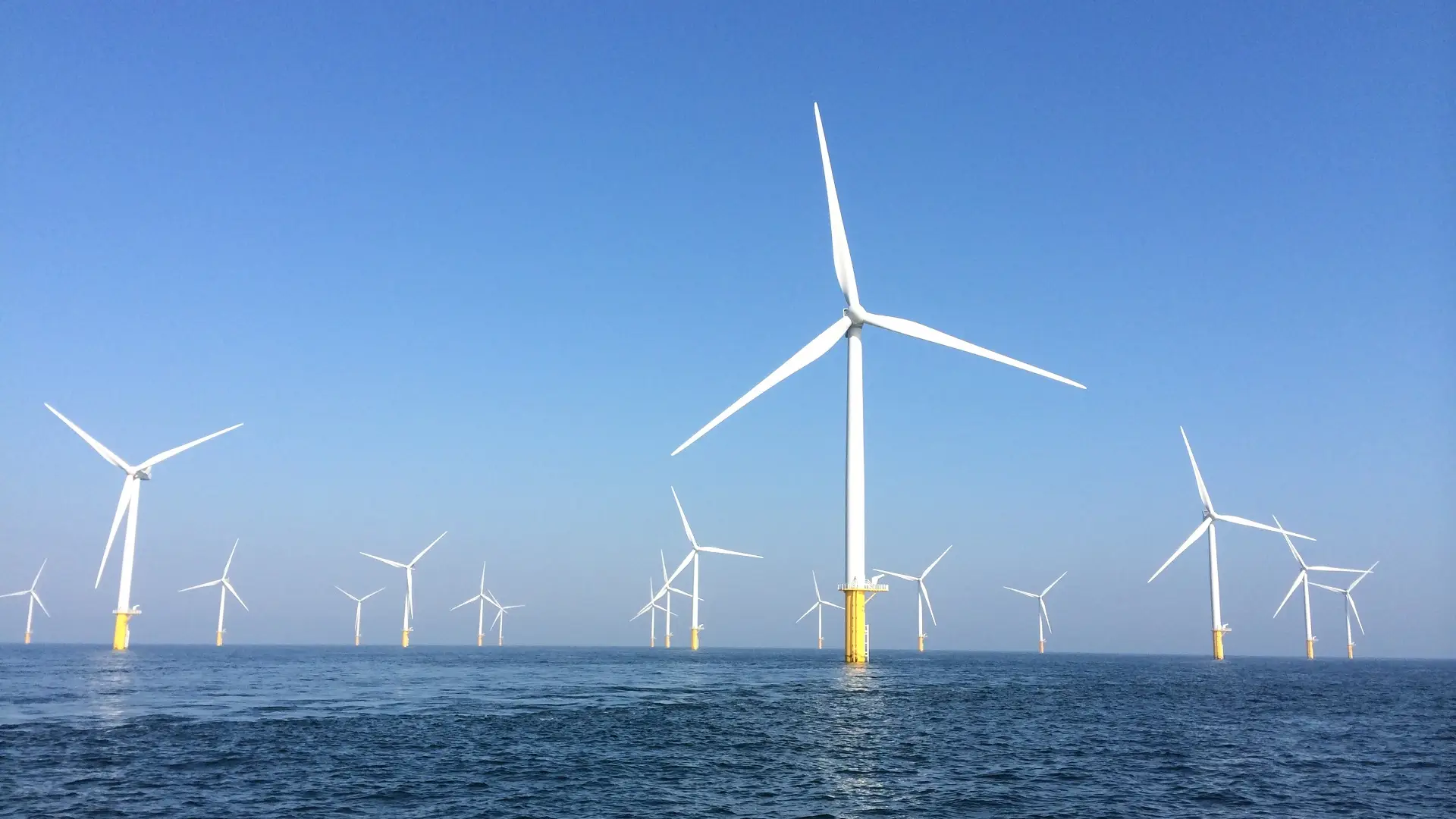


When sea breezes carry 3.5% salt spray onto wind turbines, LNG carriers, or warship decks, the metal structures corrode at a rate invisible to the naked eye—ordinary carbon steel can rust through in a year in such an environment, which is not an exaggeration. In this race against time in the “war against corrosion,” TST SEAL high-performance sealing modules, with their military-grade technology, are becoming an “invisible shield” protecting the safe operation of coastal and offshore equipment.
I. The “Triple Threat” of High Humidity and Salt Spray Environments Coastal and offshore equipment, exposed to extreme corrosive environments for extended periods, faces three core challenges:
Electrochemical Corrosion:** Chloride ions (Cl⁻) penetrate metal oxide films, initiating pitting and crevice corrosion, especially at dissimilar metal contacts where a galvanic cell effect occurs, accelerating failure.
Aging of Sealing Materials:** High humidity and strong ultraviolet radiation cause traditional rubber to harden and crack, while fireproof sealant expands and fails after absorbing water, losing its airtight and watertight properties.
Cable Insulation Breakdown:** Moisture seeps in along sealing gaps, adhering to salt and reducing insulation resistance, inducing partial discharge or even short circuits and fires.
Data shows that unprotected permeable systems in C5-M marine atmospheres have a failure rate as high as 60% within 3 years. Modern sealing modules are key to overcoming this predicament.
II. The “Three Musketeers” of Corrosion Protection in Sealing Modules
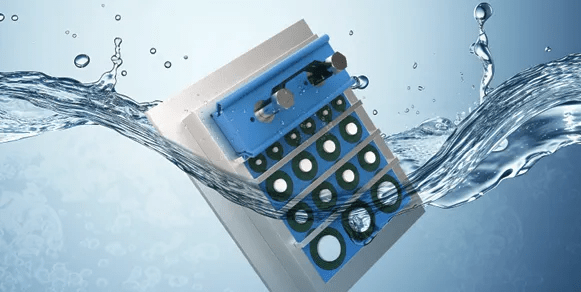
Addressing the aforementioned pain points, TST SEAL’s high-end sealing modules utilize a three-pronged innovation in materials, structure, and process to construct a comprehensive protection system:
1. Material Layer: A Corrosion-Resistant “Golden Combination”
Metal Frame: Utilizes 316L stainless steel containing ≥2% molybdenum, offering three times the chloride ion resistance of 304 stainless steel, and passing a 1000-hour C5-M salt spray test without rust;
Sealing Body: Self-developed EPDM rubber, with added ozone inhibitors and nano-zinc oxide, maintaining >90% tensile strength after 2000 hours of UV aging;
Interface Treatment: Passivation of metal parts + silane coupling agent coating, eliminating the risk of galvanic corrosion.
2. Structural Layer: Modular + Dynamic Compensation
Replaceable Design: Separate sealing core from frame; only module replacement is needed for localized aging, avoiding secondary damage from overall disassembly;
±5mm Tolerance Adaptation: Supports manual drilling installation, absorbing stress from hull deformation or tower displacement;
Armored Fixing Groove: Specifically designed for submarine armored cables, preventing steel wires from scratching the seal and improving vibration resistance.
3. Functional Layer: Multi-layered Integrated Protection
IP68 Watertight Rating: Leak-free for 72 hours under 0.5MPa pressure;
Ex d IIC Explosion-proof: Blocks the propagation path of explosion flames;
EMC Shielding Effectiveness 42–63dB: Ensures stable control signals.
III. Practical Case Studies: “Hardcore Verification” from Wind Power to Warships
Case 1: CGN South China Sea Deep-Sea Wind Power Platform
In harsh environments with annual humidity >85% and salt spray deposition reaching 300mg/m²·d, TST SEAL sealing modules are used for cable penetration in wind turbine tower foundations. Three years of operation with zero leaks, reducing downtime for maintenance by 12 times per year compared to traditional solutions, and lowering maintenance costs by 35%.
Case 2: ZPMC Offshore Wind Turbine Installation Vessel
This vessel is equipped with a high-voltage frequency converter system, which is subject to strong electromagnetic interference. After adopting a sealed module with copper mesh shielding, the false alarm rate of the control system dropped from 5 times per month to 0, and it passed the ABS classification society A-60 fire protection certification, successfully completing delivery for the European North Sea project.
Case 3: Upgrade of the Powerhouse of a Domestic Destroyer
In the high-temperature and high-humidity powerhouse, the original rubber seals cracked after 2 years. After replacing them with a 316L+EPDM modular system, it passed the Navy’s rigorous salt spray + vibration composite test (500Hz, 5mm amplitude), and has been in continuous service for 5 years without failure, earning the military’s “Reliable Equipment” commendation.
IV. Future Trends: Intelligent, Green, Globalized
Intelligent Monitoring Integration: Embedded miniature humidity/corrosion sensors transmit data wirelessly via LoRa, enabling predictive maintenance of sealing conditions;
Green Material Replacement: Accelerated development of bio-based EPDM and recyclable stainless steel frames, responding to IMO 2030 environmental regulations;
Deep Sea and Polar Expansion: Developing sealing modules resistant to -60℃ low temperatures and high pressure (20MPa) for 2000-meter deep-sea oil and gas platforms and Arctic LNG projects;
Domestic Standards Go Global: China’s TST SEAL sealing modules have obtained certifications from five major classification societies, including CCS, ABS, and BV, and are rapidly replacing European and American brands, achieving a market share exceeding 40% in Europe, the Middle East, and Southeast Asia.
In the “corrosion battlefield” of high humidity and salt spray, TST SEAL sealing modules have long transcended the function of “leak sealing,” evolving into a comprehensive safety system integrating corrosion resistance, fire prevention, explosion protection, vibration resistance, and electromagnetic shielding. Silently, it safeguards the “lifeline” of every offshore wind farm, every ocean-going vessel, and every warship. As the industry says, “The strongest defenses are often hidden in the smallest perforations.” This “Great Wall of Corrosion Prevention” built by Chinese intelligent manufacturing is writing a powerful chapter of Eastern technology on the global blue map.