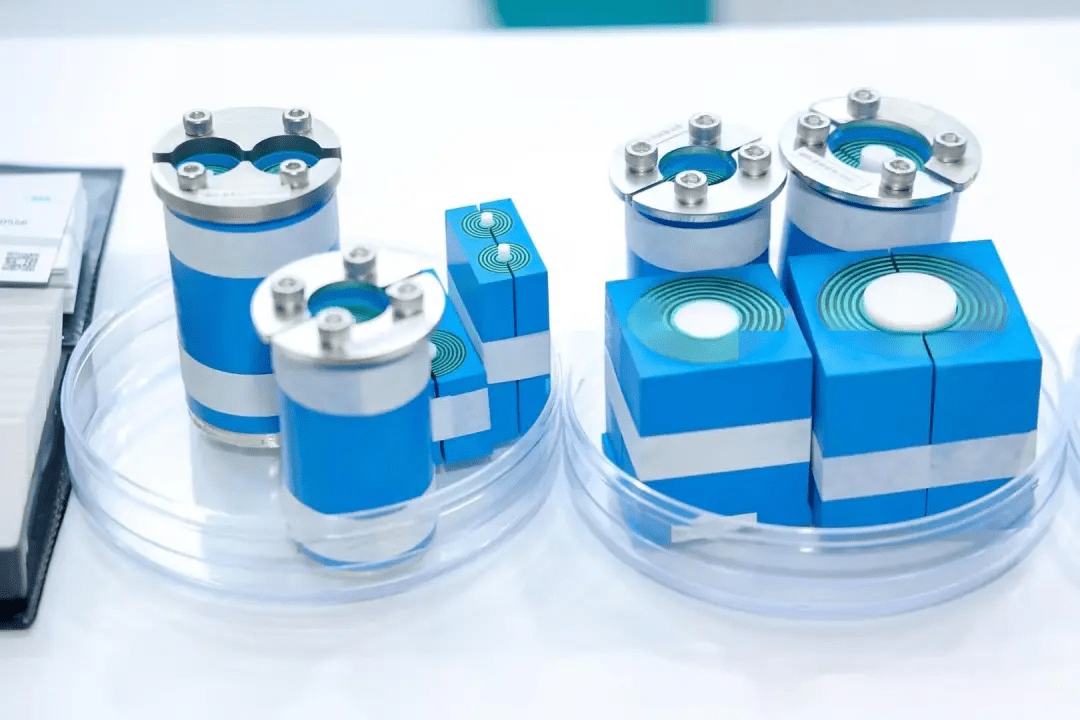

Cable sealing modules play a crucial role in safety protection and system reliability assurance in thermal power plants (coal-fired, gas-fired, biomass, etc.). Although the environment of thermal power plants is not as extreme as that of nuclear power plants, the high temperatures, dust, vibration, corrosive fumes, and stringent fire protection requirements place high demands on the sealing of cable penetrations. The following is an analysis of the main uses and application scenarios of TST SEAL cable sealing modules in thermal power plants :
- Core Application Scenarios of Cable Sealing Modules
- Fireproof sealing of cables penetrating the main plant building
Location: Cable penetrations in the walls and floors between the turbine room, boiler room, and central control building.
use:
To prevent fire from spreading between different fire compartments through cable channels;
To meet the requirements of the “Code for Fire Protection Design of Thermal Power Plants and Substations” (GB 50229), the fire resistance rating is usually required to be ≥2 hours (EI120).
Advantages: Compared to traditional fireproof putty/fireproof bags, the modular system can be repeatedly opened and expanded, and will not crack over a long period of time.
- Sealing of the entrance to the electronic equipment room & DCS/PLC control cabinet
Location: Rooms containing low-voltage equipment such as distributed control systems (DCS), relay rooms, and engineering workstations.
use:
Dustproof, moistureproof, and prevents small animals from entering (avoiding short circuits or chewing through signal wires);
Upgrade the overall IP54/IP65 protection rating of the server rack;
Reduce electromagnetic interference (EMI) and ensure the stability of control signals (some modules integrate shielding layers).
- High-temperature cable entry point in the boiler area
Location: Near the furnace, superheater, economizer, instrument junction box, and thermocouple lead-out point.
Challenges: Ambient temperatures often reach 80~150°C, accompanied by heat cycles during unit start-up and shutdown.
Solution:
High-temperature resistant silicone rubber (VMQ) or fluororubber (FKM) sealing modules are used;
The frame is made of 316 stainless steel, which is resistant to flue gas corrosion (including SO₂ and NOₓ).
- Desulfurization and denitrification (FGD/SCR) system
Location: Absorption tower, flue, ammonia area, limestone slurry pump room.
Special requirements:
Resistant to strong acids (pH<2), strong alkalis, high humidity, and chloride ion corrosion;
In ammonia areas (hazardous areas), explosion-proof requirements (Ex d IIC T6) must be met.
The sealing material must be chemically resistant (such as EPDM+PTFE composite).
- Coal conveying system & dust explosion-proof area
Location: Coal crusher room, transfer station, raw coal warehouse.
Risk: High coal dust concentration poses a risk of dust explosion (Zone 20/21).
Sealing requirements:
The cable inlet must be completely sealed to prevent dust from entering the electrical equipment.
Use explosion-proof certified cable sealing glands or module systems;
Smooth surface, dust-free structure.
- Circulating water pump room & water treatment workshop
Location: Cooling water system, condensate polishing, acid and alkali storage area.
need:
Waterproof and moisture-proof (IP68), preventing water from flowing back into the pit;
Resistant to sputtering by acids, alkalis, sodium hypochlorite, and other chemical agents;
It typically uses an integrated waterproof sealing module with a stainless steel compression ring.
- Summary of Technical Performance Requirements for TST SEAL Sealing Module System
Performance dimension | Typical requirements |
Fire resistance | EI60 ~ EI120 (based on GB/T 19666, IEC 60332) |
Protection level | IP54 (indoor) → IP66/IP68 (outdoor/humid areas) |
Temperature range | -40°C to +150°C (short-term tolerance up to 200°C) |
Chemical resistance | Resistant to SO₂, H₂SO₄, NaOH, NH₃, Cl⁻ |
Explosion-proof certification | ATEX / IECEx (for ammonia areas, hydrogen stations, and pulverized coal areas) |
Installation and maintenance | Supports future cable additions, tool-free installation and removal, and is reusable. |
- of TST SEAL sealing module compared to traditional sealing methods
Blocking methods | defect | TST SEAL Modular Sealing Advantages |
Fireproof putty/fireproof bag | Cracking, irreversible, and unable to expand | Flexible seal, can be opened and closed repeatedly. |
cement mortar | Rigid cracking, damaged cable | Flexible compression and protection of cable sheath |
ordinary Gran | Single cable, low efficiency, no fireproofing | Multi-cable integration, fireproof + waterproof integrated |
✅ In thermal power plant renovation or new construction projects, modular cable sealing systems have become the mainstream choice, especially in the context of smart power plants and digital upgrades, where there are higher requirements for “maintainability” and “status visualization”.
- Typical Application Cases of TST SEAL Sealing Modules
A 660MW ultra-supercritical coal-fired power plant: An
IP65-level module sealing system was adopted in the DCS electronics room to solve the problem of I/O card failure caused by condensation during the rainy season in southern China.
A 9F-class gas-steam combined cycle power plant:
In the waste heat boiler area, silicone sealing modules resistant to 150°C were used to replace the original PVC sleeves, increasing the service life from 3 years to more than 10 years.
The ammonia water area of the biomass power plant
uses stainless steel with FKM sealing modules certified by TST SEAL Ex d, and has passed the explosion-proof acceptance of the local safety supervision department.
In thermal power plants, the core value of the TST SEAL cable sealing module lies in:
Upgrade fire safety level (fire compartment integrity);
Ensure the reliability of the control system (dustproof, moisture-proof, anti-interference);
Adaptable to harsh industrial environments (high temperature, corrosion, dust, explosion-proof);
Reduce the overall lifecycle maintenance cost (easy to repair, expandable, long lifespan).
If you require technical parameters or compliance advice for specific areas (such as “hydrogen-cooled generator sealing solutions” or “explosion-proof sealing selection for denitrification ammonia areas”), please feel free to email me for further discussion .