The same 200 mm penetration can cost ten times more in materials: USD 9 of mortar, or USD 85 of modular frame. What decides whether that money was well spent is not the price of rubber. It is how many times the opening gets reopened in five years.
Data centre openings are alive. Rack density climbs from 6 kW to 15 kW, copper becomes fibre, a closed cold aisle is retrofitted with rear-door cooling — every one of those changes touches the penetration configuration. Get the selection wrong and the bill arrives not at acceptance, but on the night of the first capacity upgrade.
1. Why “just seal it” fails in a machine room
1.1 Three requirements are assessed at once
- Fire compartmentation— GB 50016 and GB 23864 in China; EN 1366-3 EI 60/90/120 on export projects; UL 1479 F/T rating in North America.
- Air-tightness— it sets leakage at 15 Pa across the cold aisle and the agent hold time in a clean-agent room. One leak fails both the PUE target and the door fan test.
- Future capacity— did the frame reserve spare slots, and are those slots blanked? That decides whether the next cable addition means “click in a module” or “chip out concrete”.
Pros: designed together, they pass acceptance in one pass and later changes avoid a fresh fire approval.
Cons: the three pull in different directions. Thermally good materials usually leak; airtight structures need void space; void space lowers fill ratio. Over-optimise one and the other two degrade.
1.2 Three blind spots of generic sealants
Pros: cheap, widely stocked, low skill threshold — still the most economic answer for a handful of small openings.
Cons: (1) fire is tested, air leakage is not, so the acceptance file contains no leakage figure; (2) the certificate covers one configuration, and mixing brands on site voids it in practice; (3) no reserved capacity, so the second cable addition destroys integrity.
Real case: a battery room in East China passed fire acceptance with mortar. Six months later the door fan test showed 1.8× the permitted leakage area, the design concentration could not be held, and the whole wall was chipped out and rebuilt. USD 400 saved in materials, USD 15,000 in rework.
2. Core functions and specifications
2.1 Three options compared (per opening, tax included, labour excluded, 2026 range)
| Modular transit system | Fire pillows / inflatable bags | Firestop mortar and sealant |
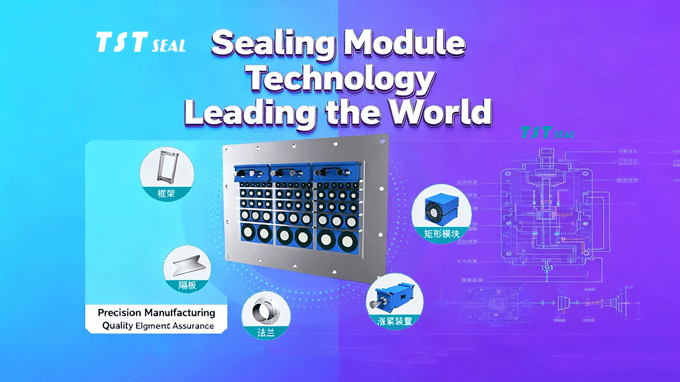
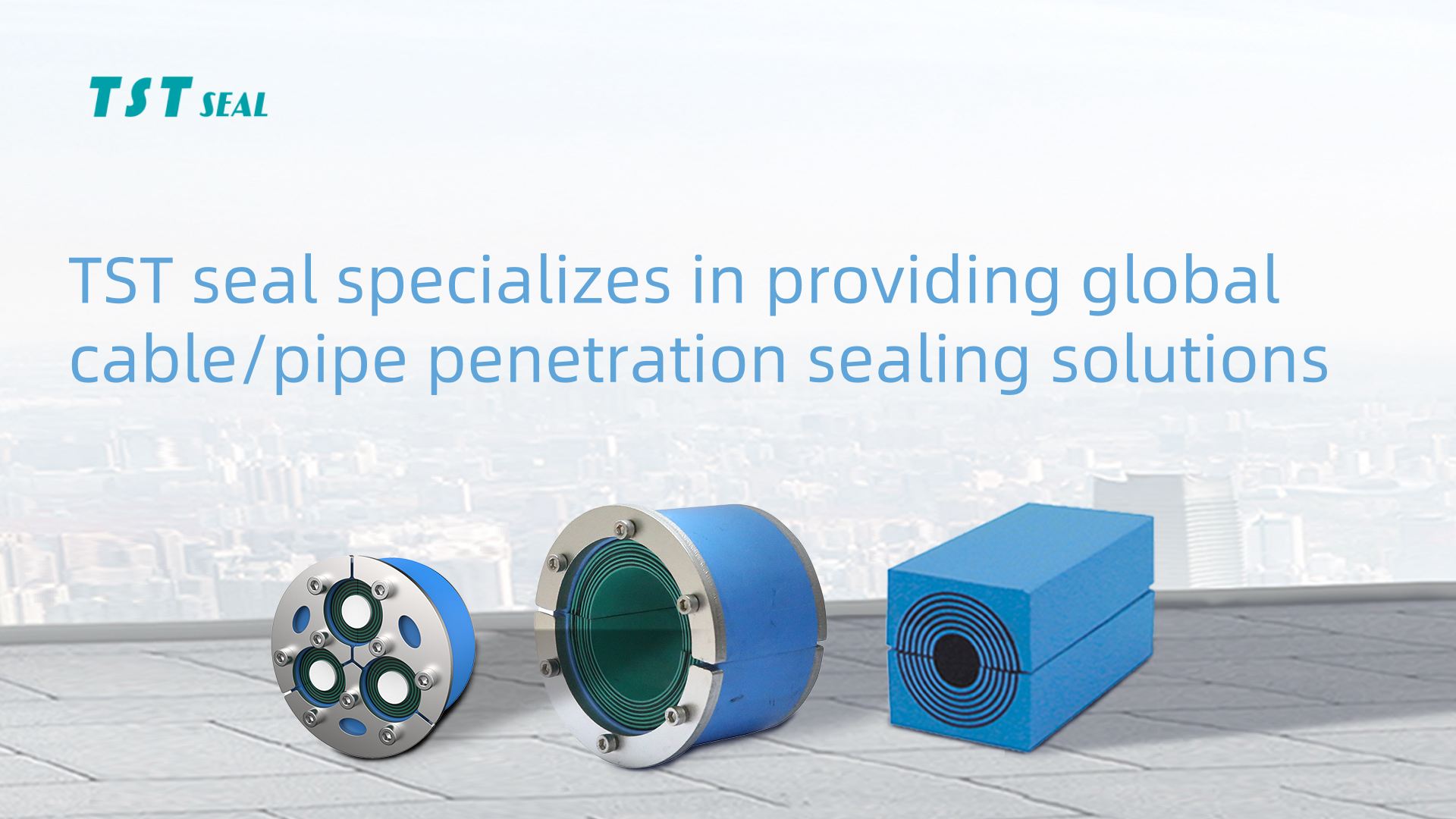
Core function | Metal frame + rubber modules + compression plates, one cable per module, reopenable | Intumescent pillows stacked and compacted | One-shot pour or trowel fill, relies on the material itself |
Ingress protection | IP68 (2 m / 24 h); optional EMC and bonding modules | None; air-tightness depends on compaction | None |
Fire rating | EI 60–120 (EN 1366-3) / F/T (UL 1479) | Around EI 60 | EI 60–120, thicker beds go higher |
Cable range | 4–32 mm per module, multi-slot frames | Any diameter, bulk fill | Any diameter |
Fill ratio | 40–70%, with 30% spare slots | Above 80%, almost no spare | 100%, no spare |
Install time | 1–2 h per opening, no curing | About 0.5 h per opening | 0.5 h + 24 h curing |
Indicative price | USD 45–130 per opening (frame ≤200 mm); USD 210–430 for large risers | USD 9–30 | USD 3–12 |
Best fit | Cold-aisle end walls, risers, UPS and battery rooms, clean-agent rooms | Live-site retrofits, night windows, leased space, temporary seals | Edge sites, a few small openings, unmanned rooms |
Pros | Fire and air-tightness both provable; adding cable needs no structural work; demountable and reusable | Fast, no hot work, night-window friendly | Lowest unit price, no spare parts |
Cons | Higher upfront cost; frame size must be right first time; modules locked to one maker’s list | Material settles, air-tightness drifts, periodic re-check needed | Irreversible; adding cable means chipping out; the old/new interface is the weak point |
2.2 Three frame sizes (for the quote page and selection sheet)
Series | Frame ID | Module slots | Cable range | Indicative price | Typical use |
DC-S | 100 × 100 mm | 4–6 | 4–16 mm | USD 45–65 | Single-rack feed, small end openings |
DC-M | 200 × 200 mm | 12–16 | 4–32 mm | USD 80–130 | Cold-aisle end wall, row PDU |
DC-L | 400 × 200 mm up | 24+ | 4–32 mm + fibre bundles | USD 210–430 | Risers, incoming room, main distribution |
Pros: three sizes cover about 80% of machine-room openings, and pricing scales linearly by slot count — no need to wait for a shop drawing at tender stage.
Cons: a cast-in frame cannot be resized, so one size down means no slot in six months; slot price falls as the frame grows, but every empty slot needs a blind module, a cost that is routinely omitted.
Real case: a tier III facility specified 100% fill with no spare slots. Eight months later, 40 fibre cables required a new opening beside the old one, a fresh firestop and a new acceptance — three days and USD 3,400, roughly 60× the USD 55 that six spare slots would have cost.
3. Application scenarios, with the trade-offs stated
3.1 Cold-aisle end wall (8 racks, 160 cables)
Two 200 mm frames in separate rows — copper above, fibre below, so heavy cables cannot crush the fibre. Spare slots blanked.
Pros: leakage at 15 Pa goes to zero in one pass; the cold air stops escaping into the hot zone; later additions need no structural work and no re-acceptance.
Cons: 30% spare capacity is mandatory or nothing fits in six months; unblanked spare slots leak as much as an open hole — the most common “nominal seal” on site.
Verdict: for new build or a full-floor retrofit, modular is not a close call.
3.2 Risers and floor penetrations
A frame per floor, fire board plus modules between levels, and support brackets because the vertical cable load bears continuously on the modules.
Pros: the riser is the stack-effect chimney; modular sealing cuts smoke movement between floors, and a single-floor addition does not disturb the others.
Cons: vertical mounting loads the modules in the wrong direction and needs brackets; floor and wall seals are certified separately and cannot be substituted for one another.
3.3 UPS and battery rooms
Stainless frames (304/316L) where acid mist would attack galvanised steel.
Pros: stainless lasts 15 years or more in acid mist, and IP68 tolerates washdown.
Cons: stainless costs 1.8–2.2× galvanised; quoting galvanised and changing later blows the budget.
Verdict: stainless for lead-acid; for lithium, follow the fire strategy — but keep a pressure-relief path rather than sealing the room solid.
3.4 Clean-agent rooms (IG541 / FM-200 / HFC-227ea)
Seal first, then prove it with a door fan room integrity test that records equivalent leakage area.
Pros: modular sealing gives a predictable, repeatable leakage figure — exactly what a hold-time requirement asks for.
Cons: when the test fails, the cause is usually ceiling voids, trunking or diffusers rather than the seal itself, which invites finger-pointing; and the test happens after fit-out, when remediation is expensive.
Verdict: clean-agent rooms give the clearest ROI, because one failed test usually costs more than the sealing material for the whole room.
3.5 Live retrofits and edge sites
On a live IDC with night windows only, fire pillows are the rational choice. At an edge site with two or three openings, mortar still wins on cost.
Pros: pillows take 30 minutes per opening, need no hot work and restore service the same night; mortar needs no spares and survives an unmanned room.
Cons: pillows must be re-checked for compaction and settlement at three months — most projects skip it, air-tightness quietly fails, and acceptance is long past; mortar means chipping out at the first addition, and is often the task that delays a capacity upgrade.
3.6 AI high-density racks and liquid-cooling retrofits (2026 addendum)
Practice: GPU racks above 30 kW run high-density fibre trunks (MPO/MTP) and coolant lines. Seal fibre trunks with multi-hole modules split per bundle; pick pipe modules by outer diameter (DN25–DN50) and verify the fire report actually covers pipe transits.
Pros: one layout takes both the fibre bundles and the coolant piping, so a liquid-cooling retrofit does not force a second opening; bundles stay within bend radius because each module is evenly loaded.
Cons: a penetration carrying fluid needs a pipe-covered certification, and some makers’ certificates exclude it — check before selection; high fibre density competes with blanking and cable management, so spare-slot demand runs higher than in a classic room.
Real case: an AI compute retrofit sealed its coolant lines like power cable. The inspector flagged that the certificate did not cover pipe transits; the modules had to be swapped for a pipe-rated set and the test repeated — a two-week delay.
4. Five hard requirements for installation and acceptance
- Frame life equals structure life— mechanically fixed to wall or slab, never bonded with foam or mortar alone.
- Equipotential bonding— the metal frame bonds to the building system; continuity measured per GB 50343, typically ≤ 0.1 Ω.
- Fill ratio below 70%— beyond that modules cannot compress, and both air-tightness and fire performance drop.
- Certified configuration only— frame size, module type and maker must match the configuration list item by item.
- Three documents— test report, classification report (EN 13501-2) and the as-installed configuration record.
5. Five-year cost per opening (three cable additions)
Item | Modular | Pillows | Mortar |
First material | 85 | 18 | 7 |
First labour | 37 | 13 | 10 |
Labour and downtime, 3 additions | 3 × 11 = 34 | 3 × 21 = 64 | 3 × 60 = 180 |
Material, 3 additions | 3 × 9 = 26 | 3 × 11 = 34 | 3 × 13 = 39 |
Re-check / maintenance | 0 | 3 × 9 = 26 | 0 |
Five-year total (USD) | 182 | 155 | 236 |
Conclusion: at one addition per year, modular breaks even in year three and then leads; below one addition every three years, pillows win; mortar only holds where the opening will never change.
6. FAQ
- Can a modular system be both fire-rated and air-tight?
Yes, but only in the exact configuration the certificate covers. A different frame size, a different module type, or modules from two makers voids it. IP68 and EI come from two separate reports — ask for both.
- Which standard applies on a Chinese project?
GB 50016 governs compartmentation and GB 23864 covers the sealing material. Export and foreign-invested projects usually add EN 1366-3 EI ratings or UL 1479 F/T ratings. The three are not interchangeable.
- Does adding cable later void certification?
Adding the same module type into a slot allowed by the maker’s configuration list does not. Drilling, cutting the frame, or switching module brands does. Keep the as-installed record, or the next acceptance has nothing to check against.
- Does it affect rack bonding or EMC?
The metal frame must be bonded to the building equipotential system. Where shielding is specified, use EMC modules and run continuity and shielding-effectiveness tests rather than quoting catalogue figures.
- Can it be used in clean-agent rooms?
Yes, but seal quality has to be proven by a door fan room integrity test. Excess leakage means the hold time will not pass.
- The price differs ten-fold — is modular worth it?
At one addition per year, the five-year cost is USD 182 modular against USD 236 mortar. Below one addition every three years, pillows are cheaper. Decide on change frequency, not unit price.
- How much spare capacity should the frame have?
1.5× the cable count expected in the next 24 months, and never below 30% of total slots. Blank every spare slot, or leakage equals an open hole.